


Passenger services in trains must improve
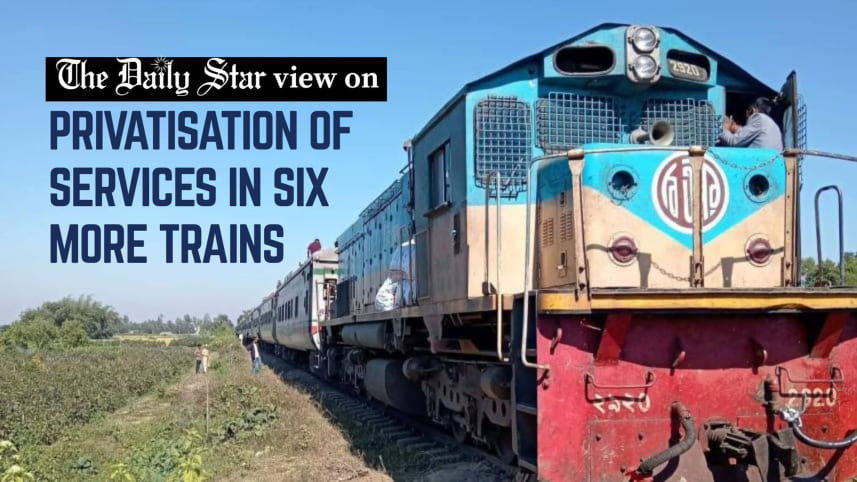
The Bangladesh Railway’s decision to lease out the operations of six more trains in its Eastern Zone to private companies could have been a welcome move had it significantly improved passenger service quality. It has been nearly three decades since the BR began involving the private sector to run some of its commercial activities. Through competitive bidding, private companies obtain the contract to sell tickets (at prices set by the BR) and check those on board. A portion of the proceeds is then returned to the railway authority.
According to the railway officials, this arrangement has improved ticket collection, which the BR staff were not able to manage properly due to severe manpower shortage. But the entire process of bidding and awarding the contracts for ticket collection and other services to a handful of private companies has raised questions in the past. Allegedly, during the Awami League regime, several companies under common ownership bribed ministers and unscrupulous BR officials to secure and retain four-year leases for more than a decade without any fresh bidding. In November 2024, the railways ministry cancelled the lease of 24 trains, allegedly for violating the conditions of the contracts.
 For all latest news, follow The Daily Star's Google News channel.
 We hope for a more transparent process under the new government. However, increasing the railway’s revenue by outsourcing some services should not be the only goal of this endeavour, because in the past, such revenue increases have not been enough to prevent the organisation from incurring losses. According to a 2025 Bonik Barta report, repairs, maintenance, and welfare programmes consume much of the railway’s operating margin. Without increasing its internal efficiency, the BR will achieve little and will enrich a few private interests by outsourcing on-board services, ticketing, cleaning, and passenger management.
Passenger rights activists have said if the government is investing crores in the BR, it should be capable of providing all the services it is expected to deliver to passengers without fail. On this point, we agree with them. The BR should not need a third party to perform these functions. While we are not opposed to private sector involvement in rail transport, such involvement must result in better services for passengers. A mere increase in BR’s revenue is not sufficient justification for outsourcing train operations. Instead, the government should encourage genuine private sector investment. We urge it to review the draft Bangladesh Railway Bill, 2024, which would allow private companies to own locomotives and carriages rather than merely manage services—effectively doing BR’s job for it.
Comments