


Education, health budgets must see real outcomes
The proposed national budget for the incoming fiscal year stands out for its strong emphasis on health and education, with both sectors receiving their highest-ever allocations as shares of GDP for the first time. The health allocation is Tk 69,409 crore, while education spending has been increased to Tk 1,36,606 crore. These increases deserve recognition as they reflect long-standing demands for the betterment of both the sectors. However, past experiences show that larger allocations alone can’t guarantee better outcomes; the real challenge lies in implementation.
The health sector received the biggest boost in budget, with the Ministry of Health and Family Welfare’s allocation expanding by 50 percent from the outgoing year’s original budget and 124 percent from the revised budget. This signals stronger political commitment to healthcare after years of underinvestment. The proposed tax waivers and duty cuts on raw pharmaceutical materials, dialysis filters, cardiac stents, and medical equipment are also promising as they could reduce out-of-pocket healthcare costs.
 For all latest news, follow The Daily Star's Google News channel.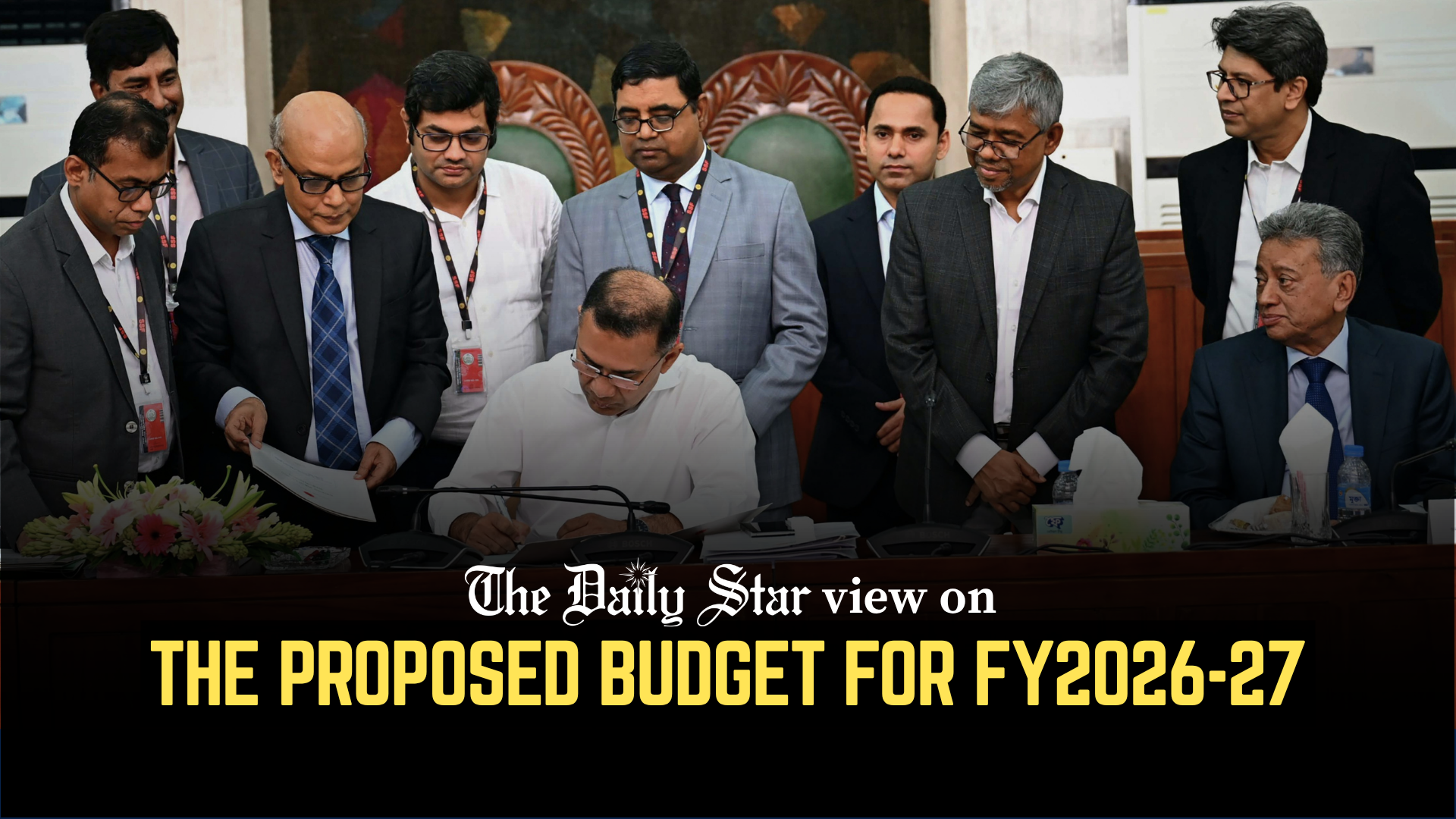
However, whether these benefits will reach ordinary citizens remains uncertain. For instance, tax concessions don’t automatically lower the prices for patients. Without strong monitoring, manufacturers, importers and healthcare providers may retain much of the benefit. More importantly, the health ministry has long struggled to properly utilise its allocation. In the first 10 months of the current fiscal year, its two divisions reportedly failed to spend even one-tenth of their development allocation due to bureaucratic delays, weak project management, inefficiency, and corruption. If projects are not selected, approved, and implemented quickly and transparently, increased spending will have little effect. Besides, modernising primary healthcare facilities and improving service delivery will require funding as well as skilled manpower, stronger governance, and accountability.
The situation is similar with the education sector. The sharp rise in funding shows that education reform is finally receiving the attention it deserves. The government’s emphasis on technical and vocational education, technology-enabled learning, third language instruction, free education for girls up to the undergraduate level, and support for disadvantaged students is encouraging. Its plan to connect highly skilled Bangladeshi professionals abroad with local education and research is also welcome.
However, how these education goals will be materialised remains to be seen. Moreover, much of the increase in education spending is driven by development expenditure, which has historically been difficult to implement effectively. According to the Centre for Policy Dialogue (CPD), utilisation of the education budget has declined over the years, while development spending has fallen even more sharply. The government must address these challenges by removing bureaucratic bottlenecks, improving accountability, and strengthening monitoring mechanisms.
The government deserves credit for prioritising health and education in the new budget, but allocation is only the first step. It must now focus on building stronger institutions, ensuring efficient use of funds, and regularly evaluating whether its programmes are delivering results. Clear targets, strict oversight, and accountability at every level will be essential. Ultimately, the success of this budget will depend not on the size of the allocations, but on whether it improves the lives of people.
Comments