


'Ciao ragazzi': Farewell to Mariano Rubinacci

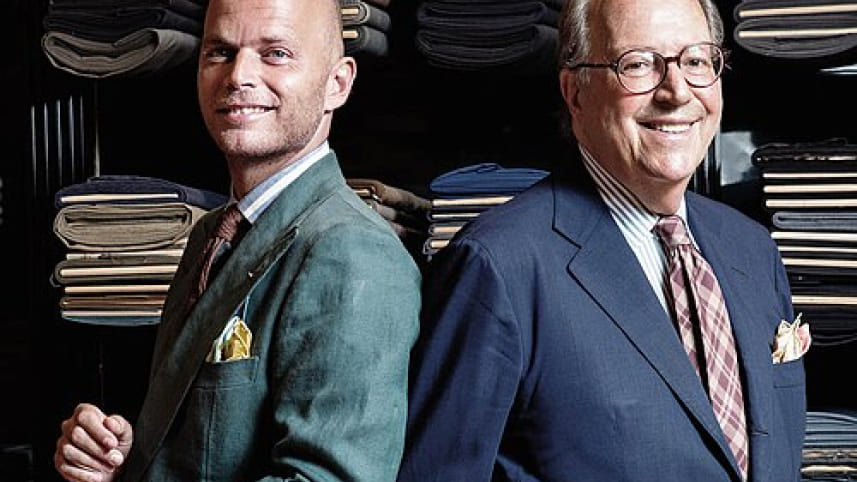
There are craftsmen who mend materials into wearables, and there are men who stitch life into clothes. Legendary Italian master tailor Mariano Rubinacci belonged, unequivocally, to the latter.
With his passing at 83 yesterday, the visual art of clothing has lost one of its most articulate custodians.
 For all latest news, follow The Daily Star's Google News channel.
 Mariano Rubinacci was not merely a tailor; he was a translator of temperament -- rendering personality into cloth with the fluency of a poet composing in wool and silk.
Born into the lineage of refinement inaugurated by his father, Gennaro Bebè Rubinacci, who established the original atelier in 1932 in Naples, Italy, Mariano inherited not simply a business at the tender age of 18, but a philosophy.
The atelier, then named London House in honour of its Anglophile clientele, would eventually become Rubinacci, a name that came to signify the highest ideals of masculine grace.
Under Mariano’s stewardship, Sartoria Rubinacci evolved into less a tailoring establishment than a sanctuary of aesthetic conviction.
Where others pursued spectacle, Mariano pursued essence.
He understood, with rare clarity, that true luxury resides not in ostentation but in ease.
Neapolitan jacket, with its unstructured softness and lyrical informality, found in him its most persuasive apostle. He carried its gospel beyond Italy’s sunlit shores and to the word, and ensuring its reverberations were felt wherever men still cared about the moral seriousness of dressing well.
This was not merely commerce. It was cultural diplomacy conducted with needle and thread. His creations now repose in institutions such as the Victoria and Albert Museum and the Fashion Institute of Technology in New York City, affirming that what he produced was not fashion, but heritage.
He elevated tailoring from manufacture to meaning.
Mariano never cultivated the theatrical celebrity of houses like Armani or Valentino. He did not need to. His authority was quieter, and therefore more enduring. He stood as the unseen architecture beneath the visible splendour of Neapolitan style, nurturing artisans, dignifying labour, and giving his city a voice at the world’s most discerning tables.
He possessed that rare gift of being both custodian and conspirator. Custodian of tradition, conspirator in its evolution. He understood that elegance was not rigidity, but repose. Not armour, but ease. Not proclamation, but persuasion.
“Ciao ragazzi,” he would say with disarming warmth. It was not a farewell so much as an embrace.
Today, that greeting lingers in the air like the faint, old perfume of a vanished age.
Mariano Rubinacci has passed away. But the eloquence he entailed promenades on -- following the silhouette of his son and successor Luca Rubinacci.
Comments