


‘Voice of Coastal Climate Resilience’: Exhibition documents Bangladesh’s coastal crisis

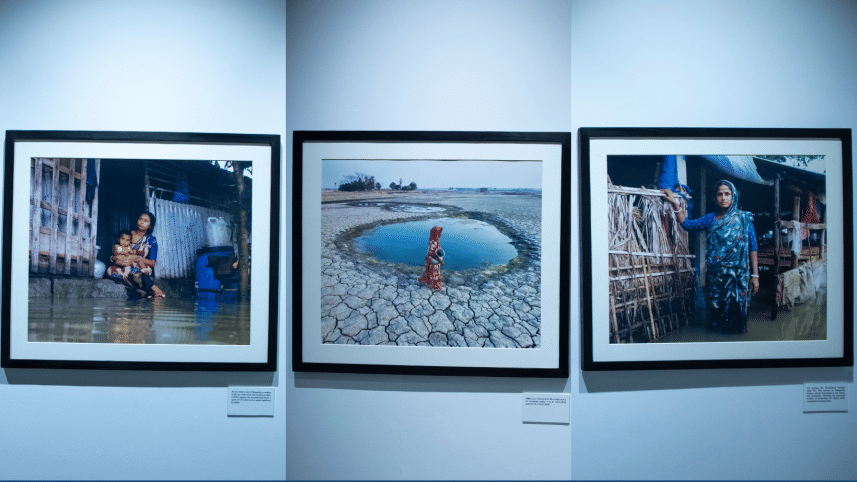
A photography exhibition in Dhaka is bringing the distant coast into focus. It does not rely on numbers or reports. Instead, it speaks through faces, fields, water, cracked earth, and the eyes of women who carry the weight of a changing climate. Titled “Voice of Coastal Climate Resilience”, the exhibition opened yesterday (May 22) at Drik Gallery, pulling the coastal world into the capital. It features around 85 photographs by documentary photographer and climate storyteller AB Rashid.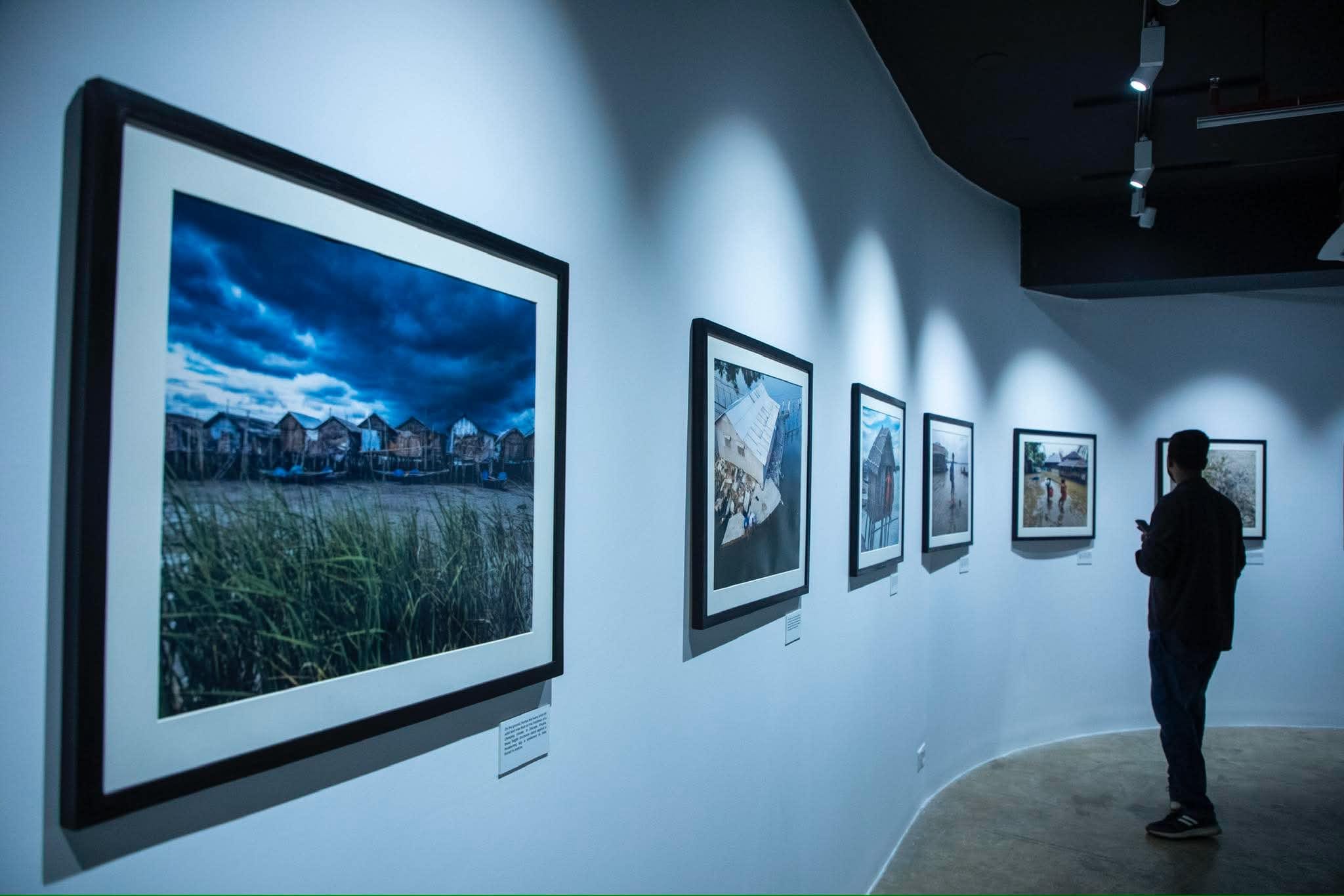
“The core story — the story of the roots — people have heard it, but they have not seen it,” Rashid has said. He has spent years on Bangladesh’s vulnerable coast, going where headlines do not follow. The result is a body of work that does not allow distance. A mother in Paikgacha holds her child against the rising flood, her body a shield, her expression carrying both fear and a terrible acceptance. A schoolboy in Dacope stands on a makeshift wooden path surrounded by floodwater, watching the water, waiting for a boat that will take him to school. In Kalabogi, near the Sundarbans, an aerial view shows a cyclone-wrecked village like a wound that has not healed. These are not images from somewhere else. They are from the same country, the same climate, only experienced differently.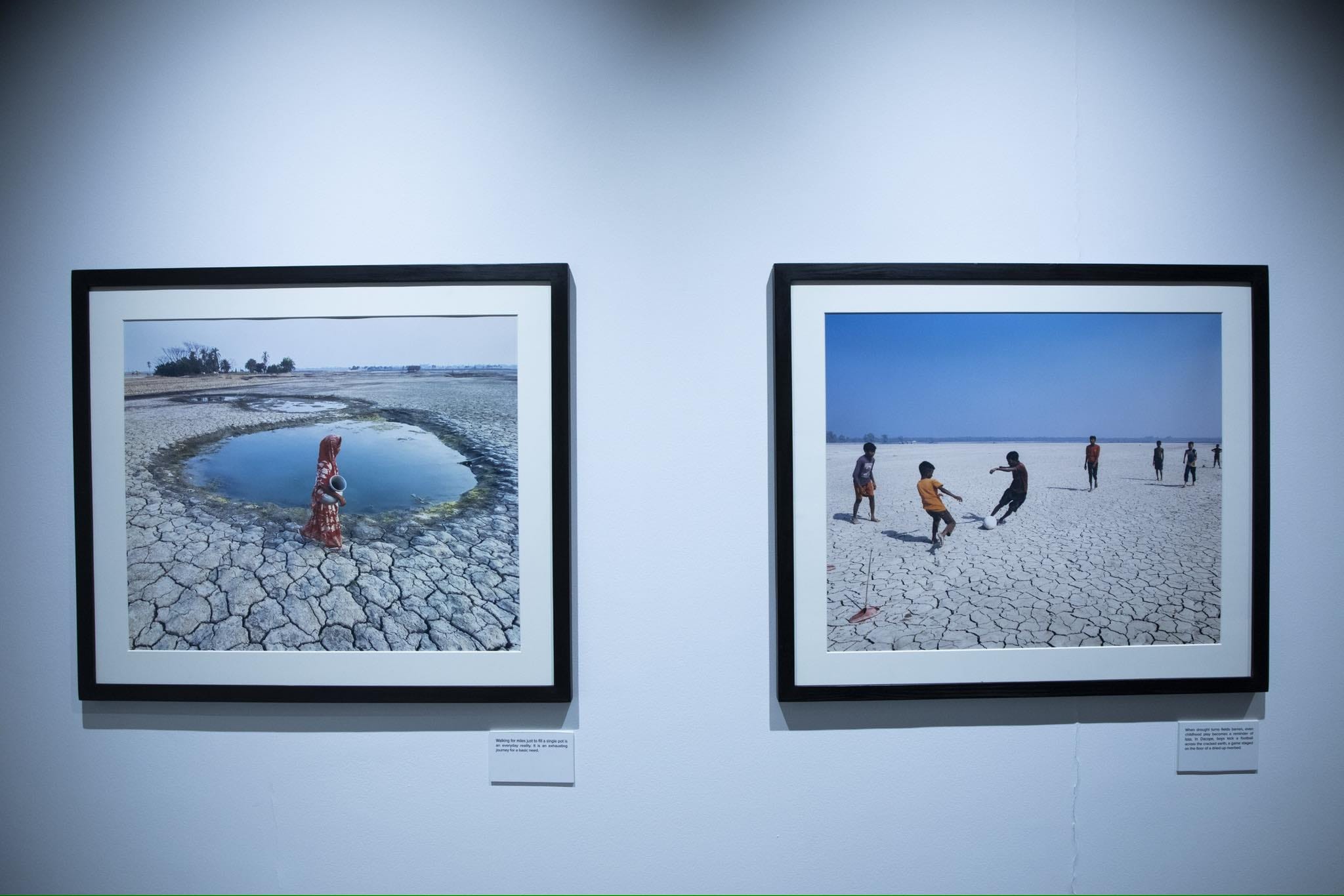
The coast suffers from opposites at once. Water rises into living rooms without warning, swallows fields, turns daily commutes into acts of faith. And yet, in the same land, the earth cracks open under drought. In Koyra, a lone tree stands almost bare in fractured soil, holding on to its last breath. Two geese pick at cracked ground in Asasuni, searching for something the earth no longer offers easily. Nature itself is struggling to adapt, and the exhibition does not let the viewer look away from that.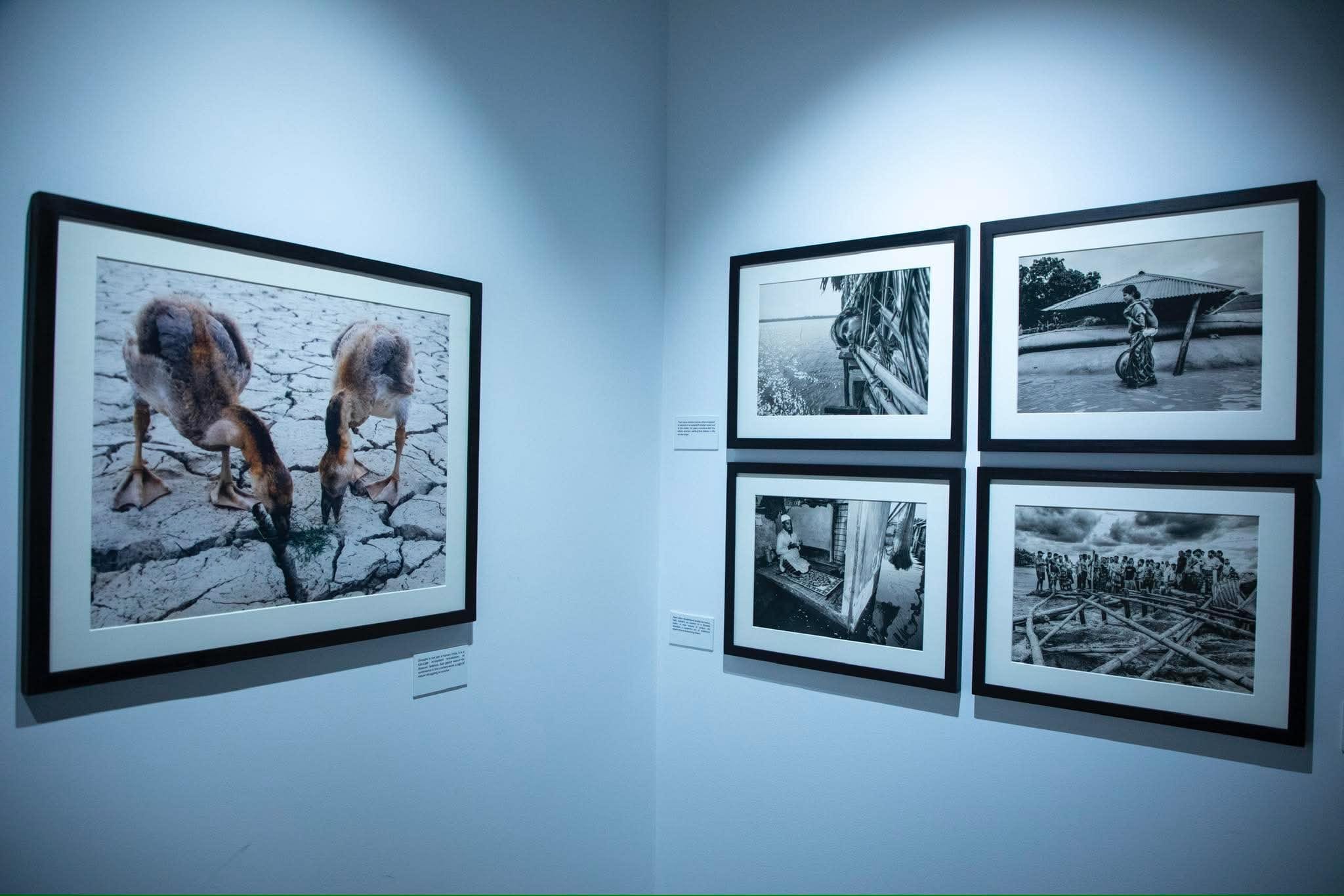
But perhaps the sharpest cruelty the photographs document is this: the coast is surrounded by water, and almost none of it is safe to drink. A man pumps a submerged tube well with desperate hope, floodwater surrounding him on all sides. Families race to a shared pond before it dries up entirely. A lone figure crouches over a shrinking puddle, scooping what little remains. Coleridge wrote it two centuries ago in a very different context: “Water, water, everywhere, nor any drop to drink.” AB Rashid has found that line living and breathing on the Bangladesh coast. The difference is that the sailor’s ordeal ended. For the women of these villages, it has not.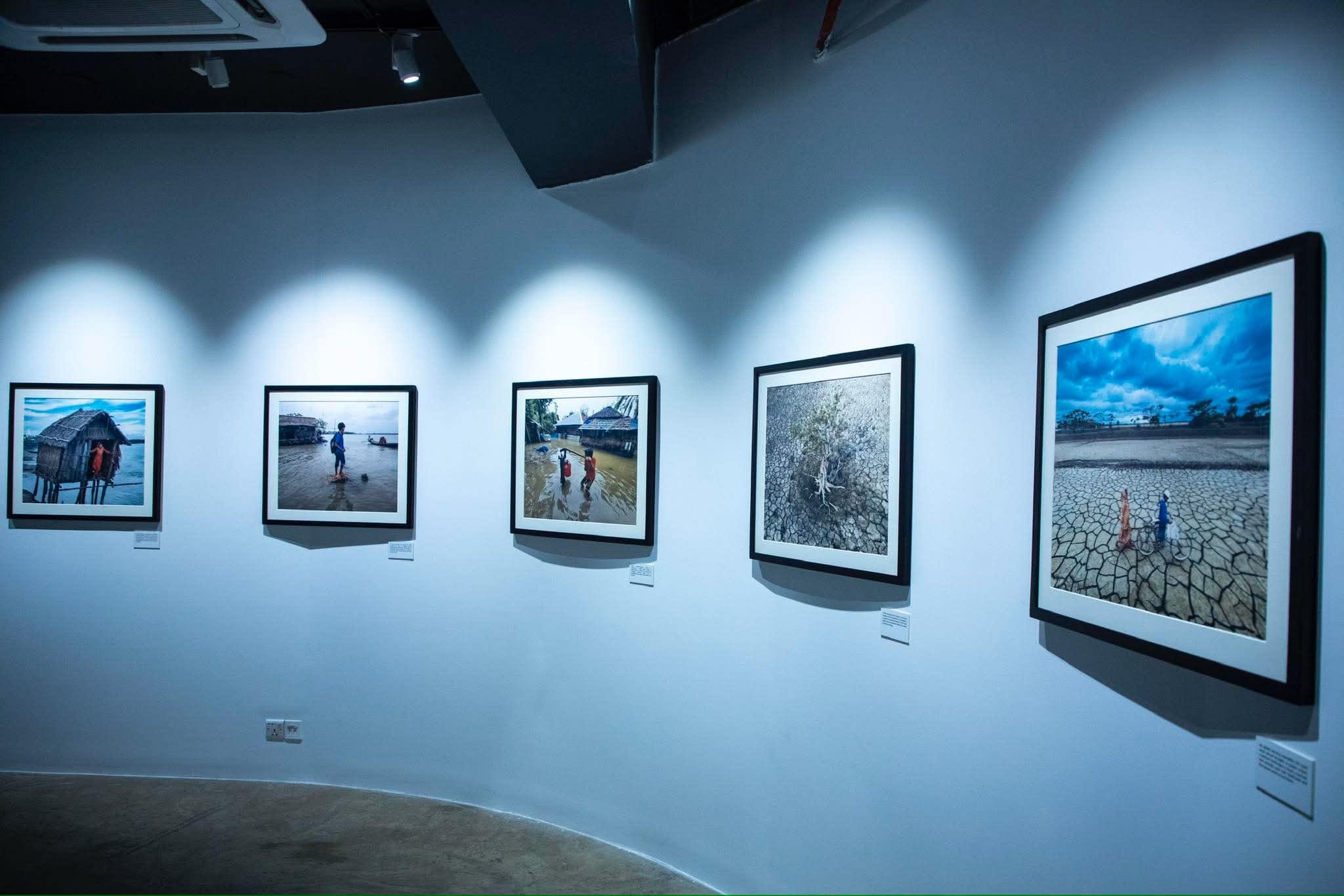
For women, the water crisis becomes a daily journey that the rest of the country does not see. They walk miles with empty pots and return with full ones, losing hours of productive time every single day. That lost time does not appear in any economic measure. It does not figure in national statistics. It simply disappears from their lives, taken by a crisis they did not create. In a city where water arrives without thought, the daily arithmetic of the coast is hard to imagine. These photographs make it impossible not to.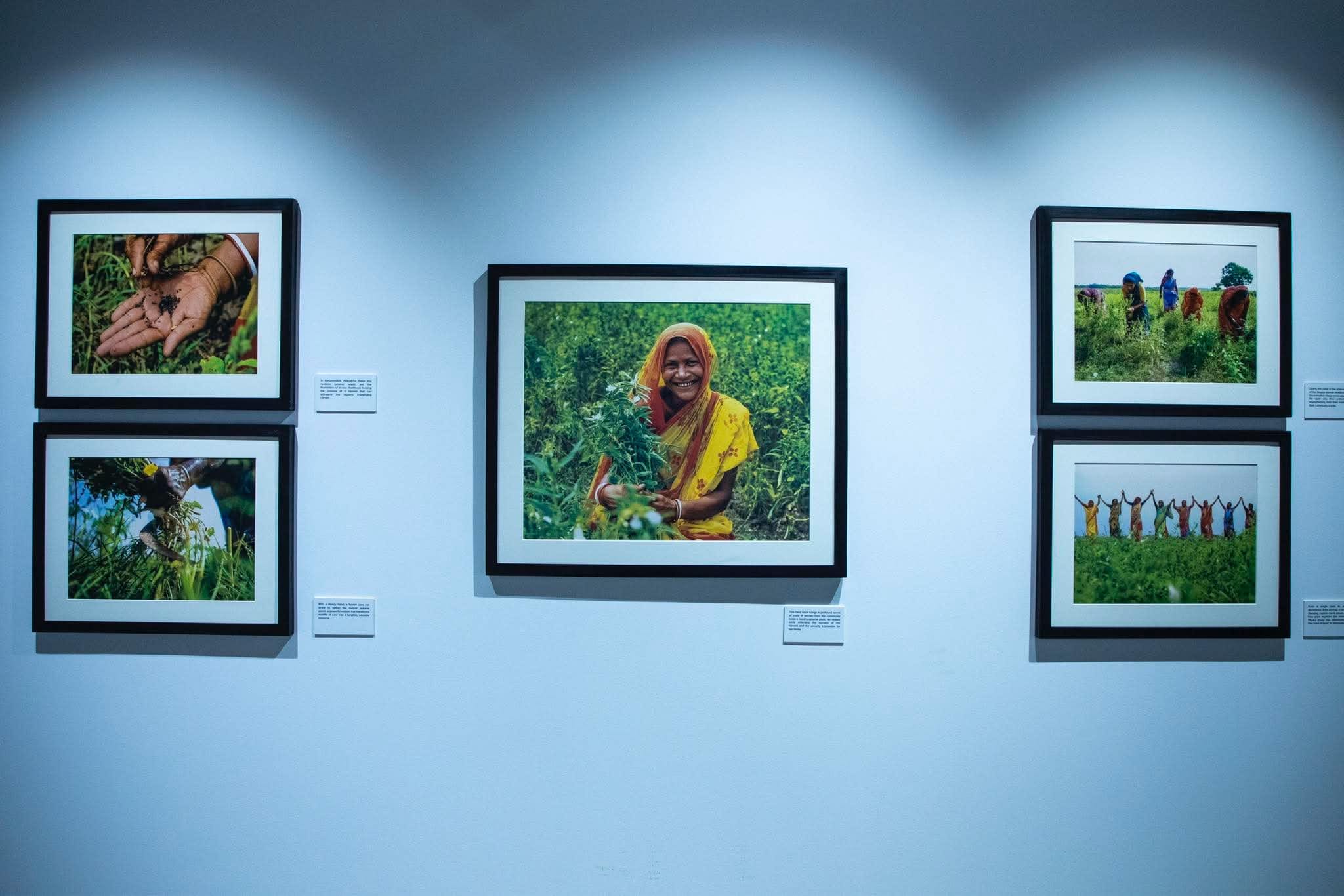
Yet what gives the exhibition its depth is that it does not stop at suffering. Rashid’s lens also finds skill, ingenuity and collective strength. Women cultivate homestead gardens on small plots reclaimed from salinity. They tend hydroponic systems that produce vegetables year-round in land the sea has made hostile to conventional farming. They sort fresh produce together and feed raw materials into fish feed presses with shared effort and visible laughter. In Asasuni, men perform their wudhu at the steps of a mosque being slowly reclaimed by water, faith continuing steadily in a world that has shifted beneath it. These images carry something specific — not the romantic resilience that outsiders project onto suffering communities, but actual labour, actual cooperation, actual refusal to stop.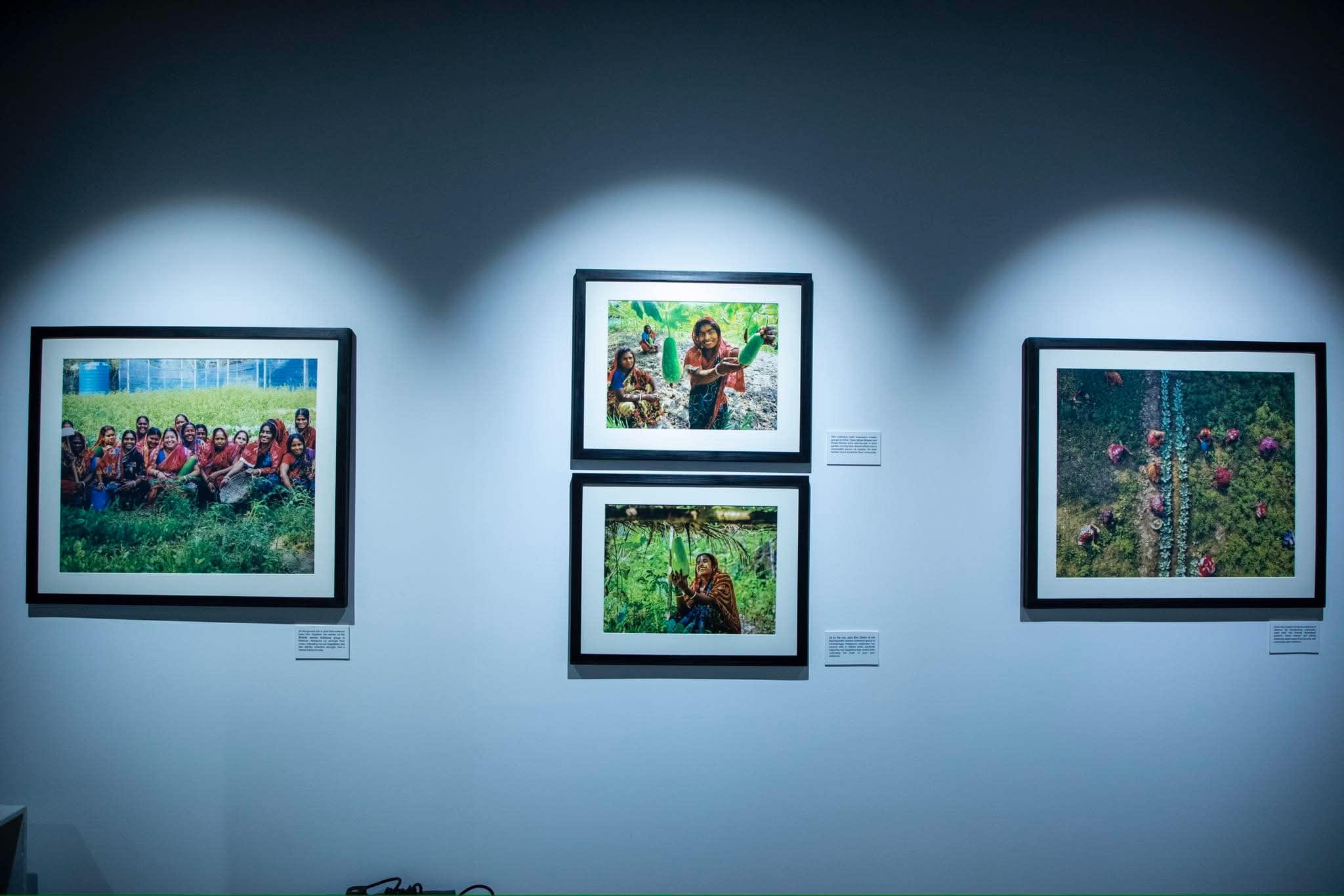
The turning point comes quietly. In Gazipara village in Koyra, a rainwater harvesting tank has ended the long morning walk for many women. An overhead photograph shows them gathered around shared taps, which speaks not of abundance but of the size of need that one resource is now meeting. The women still carry pots. But they are walking home. That difference — the direction of the walk — is everything.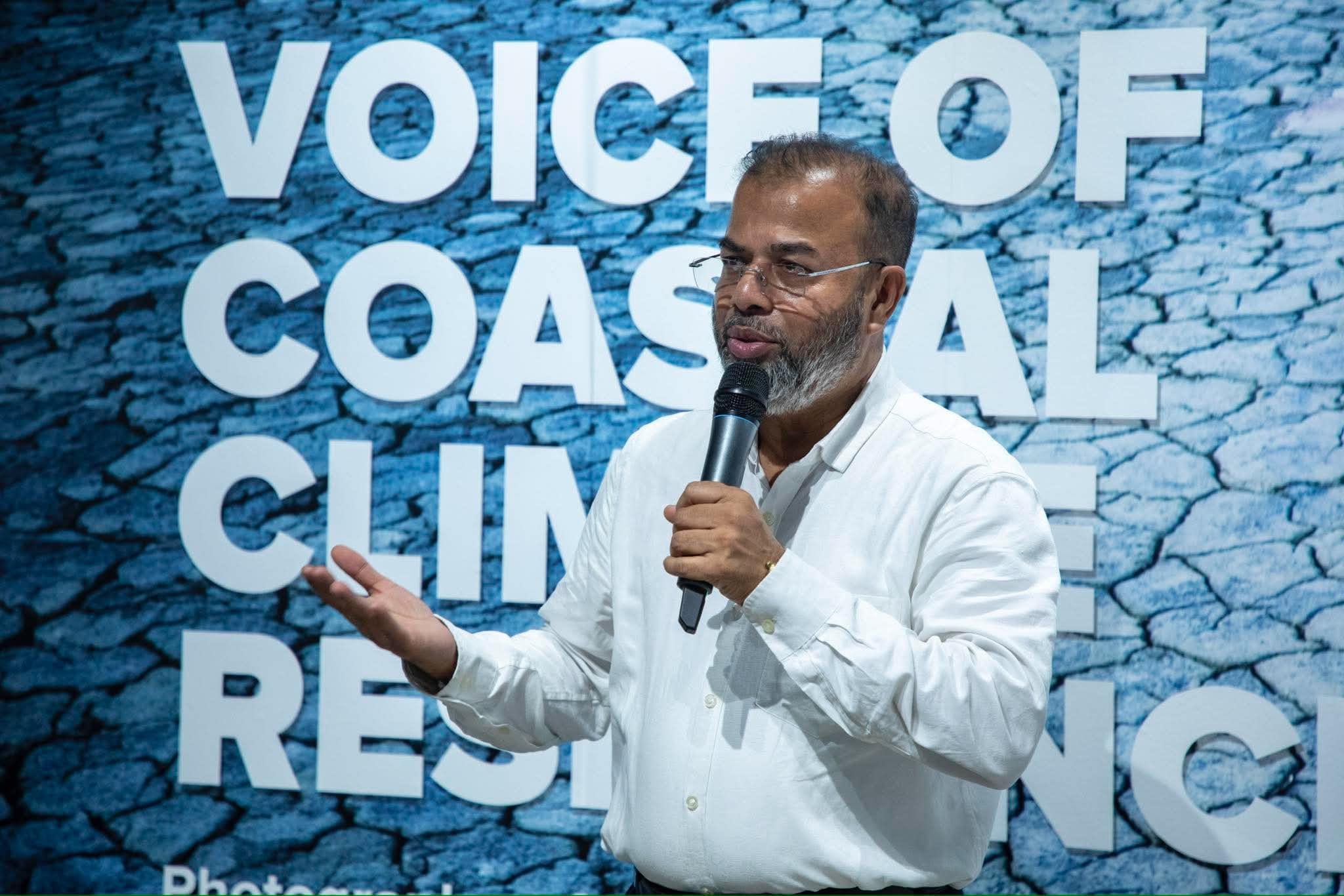
The exhibition is organised under the UNDP’s Gender-responsive Coastal Adaptation Project, implemented with support from the Green Climate Fund and the Government of Bangladesh. The inaugural ceremony was attended by Shaikh Faridul Islam, State Minister for Environment, Forest and Climate Change; Md Abdul Hye Al Mahmud, National Project Director of the GCA Project; Sarder M Asaduzzaman, Assistant Resident Representative and Head of Resilience and Inclusive Growth Cluster at UNDP; and Md Abdul Quayyum, Head of Communication, UNDP Bangladesh. Organisers note that women’s contributions to climate resilience remain consistently underrepresented despite their central role in holding communities together in disaster-prone areas. The exhibition is an attempt to correct that, not with arguments, but with 85 photographs accumulated over years of fieldwork.
These photographs do not ask for pity. They ask for something harder — acknowledgement. Of what has been happening at the edge of the country, in the places where the land meets the sea and loses, slowly, year by year, to forces that were set in motion far away. The people in these photographs did not cause this. They are simply the ones who wake up every morning and carry it.
The exhibition runs until May 23 at Drik Gallery, open daily from 3 pm to 8 pm.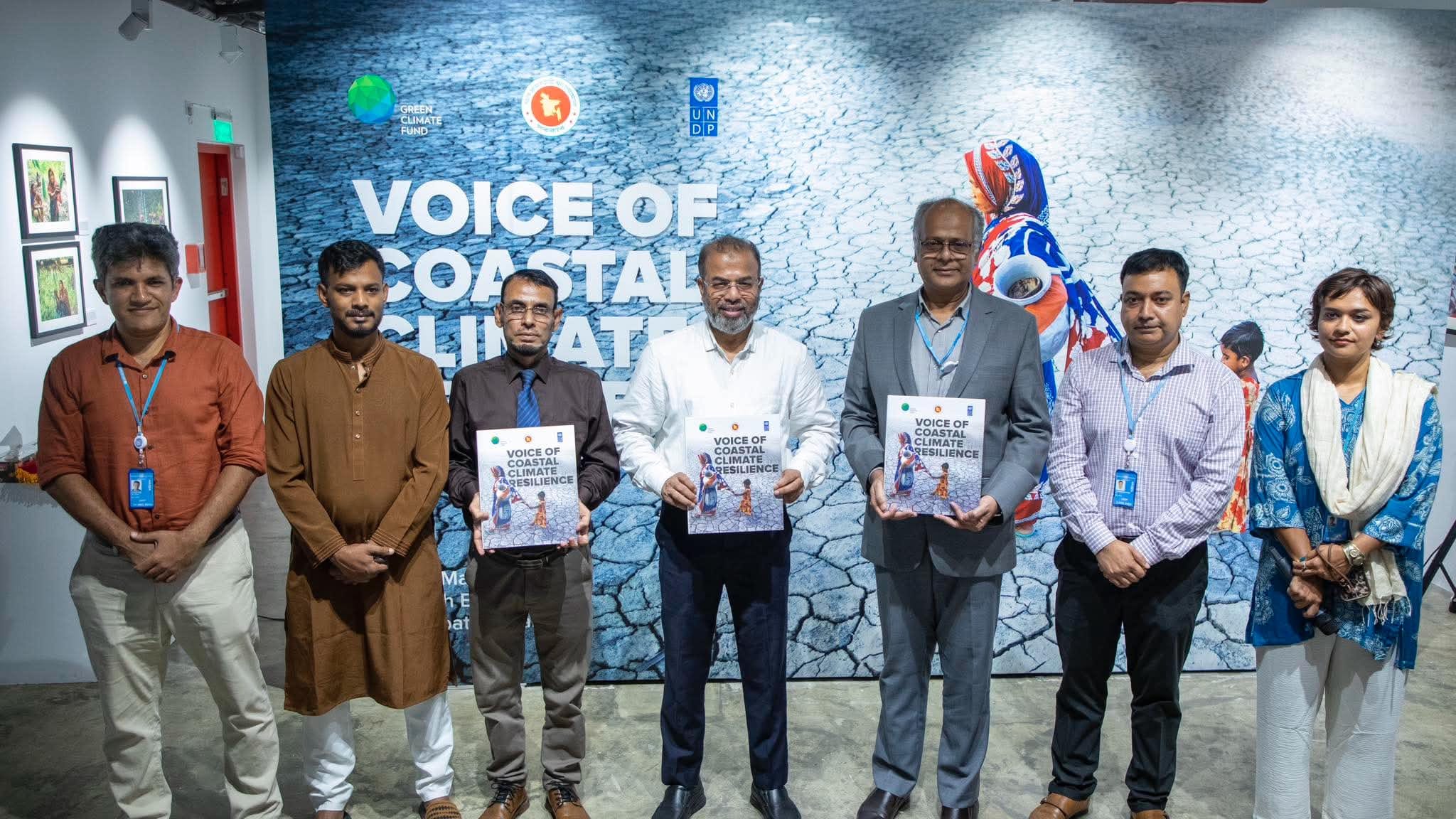
 For all latest news, follow The Daily Star's Google News channel.
Comments