


Govt allows duty-free import of electric school buses
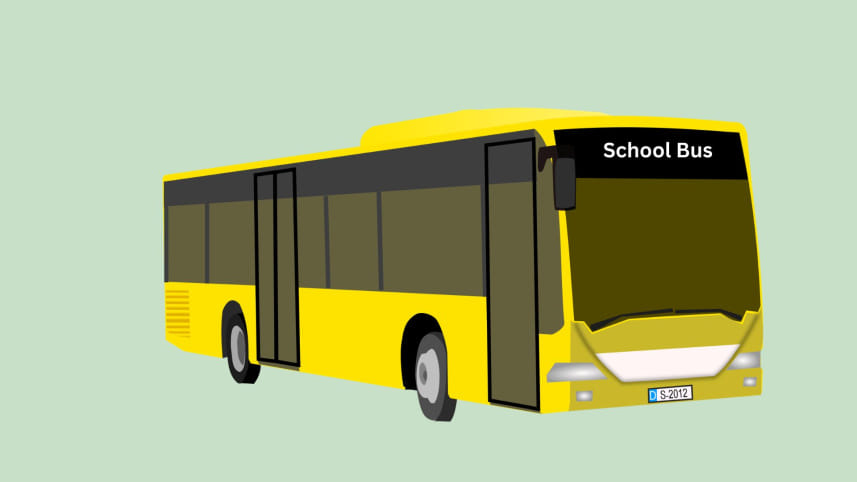
The government has allowed the duty-free import of electric buses for educational institutions to promote safe and environment-friendly transportation for students.
The Internal Resources Division (IRD) under the Ministry of Finance issued a statutory regulatory order (SRO) recently, following consultations with the National Board of Revenue (NBR).
 For all latest news, follow The Daily Star's Google News channel.
 Under the SRO, electric buses imported for student transport will enjoy full exemption from customs duty (CD), regulatory duty (RD), value-added tax (VAT), supplementary duty (SD), advance tax (AT), and advance income tax (AIT).
The facility applies to buses with a minimum seating capacity of 17, including the driver.
Both public and private educational institutions, as well as importers contracted to provide student transport services, will be eligible for the benefit.
To qualify, the buses must be brand new and comply with standards set by the Bangladesh Road Transport Authority (BRTA) or other relevant authorities. Alternatively, certification from the exporting country’s type approval authority will be accepted.
The battery of the buses must carry a minimum warranty of seven years or 300,000 kilometres, supported by proper documentation.
The buses must be painted yellow and clearly marked as “School/College/Student Bus.”
For safety, they must also be equipped with CCTV or IP cameras and GPS tracking systems.
The vehicles cannot be used for commercial purposes, including rental or ride-sharing services, and must be registered with the BRTA as student transport buses.
According to the notification, the imported buses must be used exclusively for student transport for at least five years. After this period, transfer or sale may be allowed with prior approval, without any tax liability.
However, if a bus is transferred within five years, applicable duties and taxes will be imposed after adjusting depreciation, subject to approval.
Importers will have to apply to the NBR with the required documents to obtain the exemption, and the board will issue a decision within 10 working days after verification.
An undertaking on non-judicial stamp paper must also be submitted to customs authorities to ensure compliance with the conditions.
In case of any violation, the exemption will be cancelled and all applicable duties, taxes, fines, and interest will be realized, and the importer will also become ineligible for such benefits in the future.
The SRO came into effect immediately and will remain valid until June 30, 2026.
NBR officials said the initiative is expected to encourage safer and greener student transportation across the country.
Comments