


Chinese and US risks mean EU chip sector faces a 'bleak future,' report says
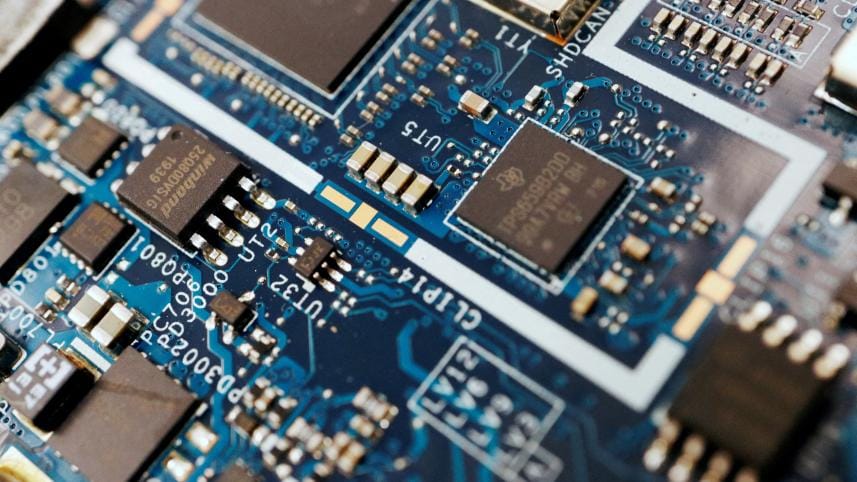
Chinese export controls, technological dependence on the US and the structural weakness of Europe's chip industry mean it faces a "bleak future" unless it can act swiftly to shore up domestic supplies, an EU-funded report found on Thursday.
The report by the European Union's Institute for Security Studies and French think-tank Institut Montaigne concluded that Chinese export controls on critical minerals and the risk of a war in the Taiwan Strait were major threats to supply.

Further vulnerability stems from the EU's dependence on the US for technology and the possibility the US could block exports to China by chip-making equipment supplier ASML, Europe's most valuable company. The US Congress is debating a proposed law that would enable Washington to impose export controls on allied nations and their companies.
"While Beijing still appears to be the biggest threat, dependence on Washington seems to have become of much greater concern under the second Trump administration," co-author Joris Teer, a policy analyst at the Institute for Security Studies, told Reuters.
The European Commission is seeking to strengthen the bloc's industry and in June proposed a Chips Act 2.0 with incentives to improve demand for domestically manufactured chips. It also joined Washington's "Pax Silica," an initiative of allied countries to secure supply chains.
Laith Altimime, who heads chip industry group SEMI Europe, said he agreed with the report's emphasis on the need for more reliable supply chains. "Without reliable access to critical raw materials, Europe's chip ecosystem cannot compete, innovate or grow," he said.
In addition to cooperating with allies to counter China, Teer said Europe's "only viable path" is to build on its existing pockets of strength, such as in chipmaking equipment, to improve leverage.
The report, which drew on industry, political and academic sources and was 90 percent-funded by EU money, also found that factors including Europe's continuing high energy prices, lack of private capital, and the decline of industries that use chips have undermined the sector's competitiveness.
 For all latest news, follow The Daily Star's Google News channel.


Comments