


PPP guidelines rolled out to use public land for renewables

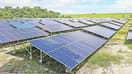
The government has introduced a new policy framework to speed up renewable energy development by allowing unused or underutilised state-owned land to be used for clean energy projects under a public-private partnership (PPP) model.
The “Guidelines for Development of Renewable Energy Projects using Land Owned by Government Agencies under PPP Modality, 2026,” unveiled on April 12, aim to ease one of the biggest bottlenecks in expanding renewable energy in Bangladesh -- the shortage of suitable land.
 For all latest news, follow The Daily Star's Google News channel.
 “One of the major pledges from this government is ensuring energy security by enhancing power production from renewable sources, which is why the guidelines are prepared,” reads a letter sent to the PPP Authority from the Power Division in this regard.
The move comes as the government seeks to implement its Renewable Energy Policy 2025, which targets at least 20 percent of electricity generation from renewable sources by 2030.
Bangladesh currently has 1,059 megawatts (MW) of installed renewable capacity -- just 3.7 percent of the total 28,504MW -- with solar at 757MW, hydro at 230MW, and wind at 62MW.
The new guidelines focus mainly on solar and wind projects, which require large areas of land.
Many government agencies -- ranging from ministries to statutory bodies -- own unused or underused land that the framework aims to bring into productive use for energy generation.
Under the framework, the Bangladesh Power Development Board (BPDB) has been designated as the main contracting authority, responsible for selecting private partners, signing contracts, and overseeing implementation.
The Power Division will sign a Government Facilitation Agreement to provide state support, while Power Grid Bangladesh PLC will handle transmission and grid connectivity.
The PPP Authority will act as the central coordinating body to resolve inter-agency issues and ensure compliance with PPP rules.
The guidelines set a minimum project size of 50MW for solar and wind, though smaller projects may be permitted for other technologies -- including tidal, wave, and geothermal -- subject to Power Division approval.
Before any project begins, the land-owning agency must confirm legal ownership and sign a memorandum of understanding (MoU) with the BPDB, which will be valid for three years.
Government agencies providing land will be compensated through lease payments, minority equity stakes, or a combination of both, depending on project feasibility, according to the guidelines.
Private developers will be selected through international competitive bidding or other PPP-compliant procurement methods. “Each project will be implemented through a special purpose vehicle (SPV), which will handle financing, construction, operation and maintenance, as well as related infrastructure such as transmission lines.”
The guidelines make it clear that no renewable energy project using government land can proceed outside the PPP framework. “All projects must comply with the PPP Act 2015, and related energy sector regulations.”
A joint working group, including representatives from the PPP Authority, Power Division, PDB, Power Grid and land-owning agencies, will monitor project progress and address implementation challenges.
After a project ends, the land cannot be repurposed for non-energy use without approval from both the land-owning agency and the Power Division.
The Renewable Energy Policy 2025, which was revised for the first time in 17 years during the interim government’s tenure, introduced several incentives for clean energy development. These include a 10-year corporate tax exemption for renewable energy producers, followed by five years of partial tax relief.
Government agencies such as Bangladesh Railway, Roads and Highways Division, Bangladesh Bridge Authority, Bangladesh Water Development Board and others have been identified in the policy as potential contributors of unused land for renewable energy development.
It also allows households, businesses, and industries to install rooftop systems and sell surplus electricity under net metering rules, introduces a renewable purchase obligation requiring utilities and large consumers to source a portion of electricity from renewables, and establishes a renewable energy certificate system for tracking and trading green power.
In the new guidelines, the Sustainable and Renewable Energy Development Authority (Sreda) has been mandated as the nodal agency for renewable energy-related regulatory and facilitative functions in all relevant activities throughout the project lifecycle.
Sreda is entitled to promote local manufacturing of renewable energy equipment and ensure quality standards through certified testing laboratories in the 2025 policy.
Comments