


Clear reform progress essential, says Debapriya

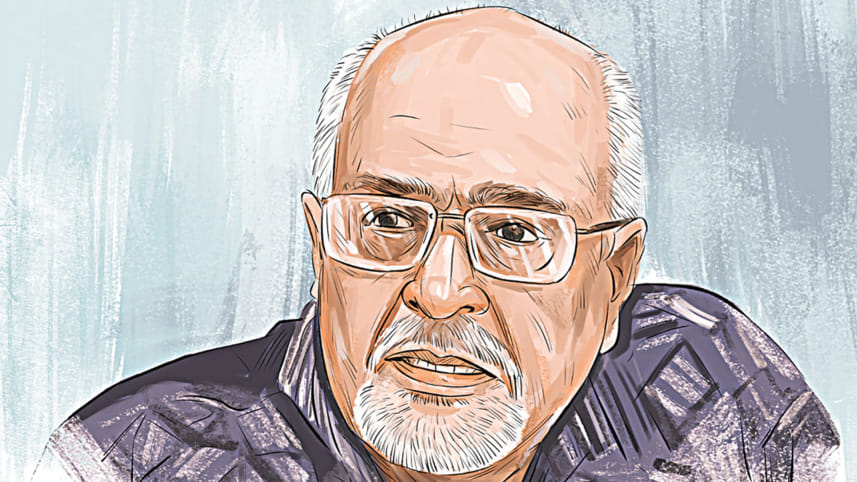
Bangladesh should show clear progress in the reforms it has committed to the UN CDP to secure a short deferral of its LDC graduation, said Debapriya Bhattacharya, a distinguished fellow of the Centre for Policy Dialogue (CPD), yesterday.
He said Bangladesh should also begin closely monitoring the implementation of its reform commitments and inform the United Nations Committee for Development Policy (UN CDP) about progress as soon as possible.
 For all latest news, follow The Daily Star's Google News channel.
 Referring to the UN CDP’s crisis assessment on Bangladesh, he said the committee had given a positive signal on Tuesday in favour of a shorter deferral, in line with Bangladesh’s request.
Based on the recommendation of the UN CDP, the United Nations Economic and Social Council will now place a proposal before the United Nations General Assembly (UNGA) for final approval of the deferment.
The UNGA is scheduled to meet at UN Headquarters in September, said Debapriya, chief of the Enhanced Monitoring Mechanism, a body of the UN CDP, while speaking to journalists at the CPD office in Dhaka.
He said Bangladesh applied on February 18 for a three-year deferment of its least developed country (LDC) graduation, which would push the transition to November 2029. However, he added that the UN CDP favours a shorter extension, although he did not specify how long it may ultimately be.
Citing the assessment report, he said the request for a three-year extension was consistent with practice in five previous cases where graduating countries were given additional time to prepare.
The report also highlighted the current high level of global uncertainty caused by external shocks. It said that Bangladesh needs time to adjust and set priorities under its Smooth Transition Strategy, which guides the graduation process.
At the same time, it warned that Bangladesh has already met the graduation criteria with a comfortable margin. Keeping the country longer in the LDC category could delay its ability to fully benefit from graduation.
“Consequently, a shorter extension of the preparatory period would appear more conducive to a sustainable graduation,” the report said.
It added that this is particularly important for reducing dependence on trade preferences and supporting a shift towards a higher-productivity and higher-value development path under Bangladesh’s strategy.
Debapriya said the UN CDP’s decision should be seen as a positive signal for Bangladesh, noting that the recommendation could help support the recovery of an already strained economy.
The committee’s recommendation is based on the view that a series of external and domestic shocks over the past five years has limited Bangladesh’s preparedness for graduation.
It also confirmed that Bangladesh exceeds all three LDC graduation criteria by a wide margin and faces a very low risk of falling below these thresholds in the near to medium term, according to international forecasts.
However, the report acknowledged significant challenges, including uncertainty linked to the Middle East conflict and its impact on global energy and supply chains, lingering effects of recent shocks, ongoing global trade uncertainty, and long-standing domestic vulnerabilities.
The UN CDP therefore said extending the preparatory period by the General Assembly would be appropriate, adding that Bangladesh should use the time to make substantial progress on domestic reforms to address structural weaknesses.
Comments