


BSEC sees full leadership reset in one day
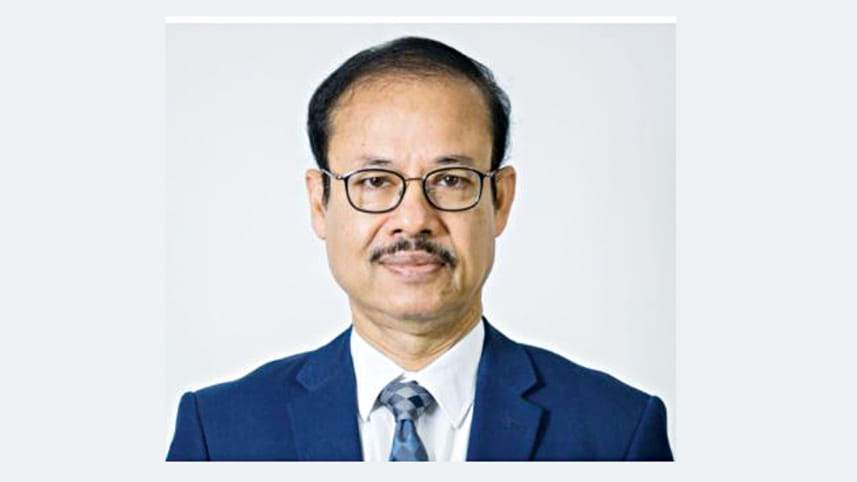
A major change took place at the Bangladesh Securities and Exchange Commission (BSEC) yesterday when the entire commission resigned, and a new one was appointed on the same day -- marking the first such complete reshuffle in the regulator’s history.
The development came just a day after Finance Minister Amir Khosru Mahmud Chowdhury said the commission would be reconstituted within two weeks.
 For all latest news, follow The Daily Star's Google News channel.
 Yesterday began like any other at the BSEC. An Eid reunion event, scheduled for 11:00am, was expected to bring together officials in a routine post-holiday gathering. However, the event was postponed at 9:20am.
Within hours of the postponement, BSEC Chairman Khondoker Rashed Maqsood resigned along with commissioners Md Mohsin Chowdhury, Md Ali Akbar, Farzana Lalarukh and Md Saifuddin.
Shortly afterwards, the government issued circulars appointing Masud Khan as the new chairman, along with Nahid Mahtab, Tanwir Habib Rahman and Md Nafeez Al Tarik as commissioners. The newly appointed members joined the office at 2:30pm and spoke to journalists, saying they aim to build a vibrant capital market.
Maqsood had taken charge of the BSEC during a turbulent period and initiated reforms aimed at strengthening the legal framework and improving market discipline.
Following the fall of Sheikh Hasina’s government, the then-chairman Shibli Rubayat Ul Islam resigned, and Maqsood was appointed on August 18, 2024.
After joining, he began reform efforts within the commission but faced disagreements from some officials.
On March 5, 2025, a group of BSEC staff locked him and three commissioners inside a meeting room for nearly four hours.
Later, the regulator suspended several officials over allegations of misconduct and disciplinary violations during the protest.
In a statement yesterday, Maqsood said that during his 21-month tenure, the BSEC gazetted five rules covering margin loans, initial public offerings (IPOs), mutual funds, debt securities and whistleblower protection.
During this period, the commission also published three draft rules and guidelines on corporate governance, audit and corporate restructuring for public feedback.
It further drafted two laws -- the Bangladesh Securities and Exchange Commission Act and the Capital Market Stabilisation Fund Act -- for enactment.
The BSEC also took strong compliance and enforcement measures to restore market discipline.
It removed formal and informal intervention mechanisms, allowing the market, intermediaries and issuers to operate more freely by restoring the rule of law and holding regular stakeholder engagement programmes.
WHAT THE NEW CHAIRMAN SAID
At his first press conference yesterday, the new chairman, Masud Khan, said the commission will review interim financial reporting requirements and strengthen enforcement against market manipulation.
He said the aim is to restore investor confidence, attract quality companies to the stock market and transform Bangladesh from a retail-driven frontier market into a transparent, institution-led emerging market.
He added that the commission seeks to build a credible and transparent capital market capable of mobilising long-term domestic and international capital.
Khan acknowledged that Bangladesh’s capital market has not kept pace with economic growth, saying investor confidence has weakened due to governance failures, limited participation of quality companies and declining foreign investor interest.
He also said digitalisation will be central to reforms, with regulatory reporting, licensing, disclosures, approvals, IPO applications and other filings to be shifted to fully digital platforms in phases.
The BSEC, Dhaka Stock Exchange, Chittagong Stock Exchange and Central Depository Bangladesh Ltd will be brought under an integrated real-time monitoring system.
Special attention will initially be given to Z-category securities, where governance and disclosure risks are relatively high.
Khan further said insider trading, circular trading, wash trades, pump-and-dump schemes, front-running and other forms of market manipulation will be detected more quickly, investigated more thoroughly and penalised more effectively.
The regulator may also empower stock exchanges to take immediate action, including temporary trading suspensions, in cases involving suspected insider trading, information leakage or serious disclosure failures.
Comments