


Are we ready for the chip era?
Bangladesh is at a moment of silent but significant transformation. One driven by technology, skills development and industrial diversification amid economic pressures and global uncertainty. This is the time to think clearly and plan ahead.
Global semiconductor sales totalled $627.6 billion in 2024, up 19 percent due to demand from AI, 5G and mobility, and are expected to surpass $1 trillion by 2030. More than a million additional skilled workers will be needed worldwide over the next decade to sustain that growth. In the Asia-Pacific region alone, there is a shortage of more than 200,000 engineers. This is not a temporary hiring challenge but a long-term structural deficit that developing countries with strong engineering pipelines can help address. Bangladesh has been searching for new avenues of diversification. This is one worth serious consideration.
 For all latest news, follow The Daily Star's Google News channel.
 Bangladesh graduates 45,000 to 50,000 engineers annually, and operating costs in Dhaka are 16 percent to 20 percent lower than in Bangalore. In January 2025, the Bangladesh Investment Development Authority (Bida) established a semiconductor task force with a goal of achieving $1 billion in semiconductor design exports by 2030. The direction is right. However, the limiting factor is not ambition but talent readiness. The industry requires expertise in RTL design, design verification, physical design, layout and design for testing. Bangladesh has a small but growing semiconductor design sector. The challenge is not a lack of work but a shortage of engineers with the skills to do it.
The education system still has gaps in some areas. Most universities offer only one or two introductory VLSI (Very Large-Scale Integration) courses, usually weighted towards theory rather than laboratory work. As a result, graduates often need six to twelve months of specialised training before they can contribute to real projects. Progress has nevertheless been made. BRAC, UIU, MIST and AIUB have established VLSI programmes, while more than 15 universities are using industry-standard EDA tools. The government SICIP initiative is helping develop industry-focused curricula. Structural reform takes time, however, and meaningful results are unlikely to be visible for another three to four years.
In the meantime, role-based and industry-aligned training can help bridge the gap. The Ulkasemi VLSI Training Institute (UVTI) is one example. Its programmes focus on specific functions such as RTL, design verification, physical design, layout and DFT. Around 80 percent to 90 percent of instruction time is devoted to hands-on work with industry-standard EDA tools under the guidance of industry mentors, with courses ranging from 240 hours to 480 hours. The outcome is not simply a certificate but an engineer ready for the workplace. Students also receive training in project management and client communication, skills often overlooked in traditional academic programmes.
This model can be scaled. The larger goal should be a coordinated system in which universities provide foundational knowledge, specialised institutes produce industry-ready graduates, and companies recruit talent that can contribute from day one.
Government support will be essential. India has invested billions of dollars in building its semiconductor ecosystem. Bangladesh does not need to match that scale, but it must act quickly. The current opportunity, created by shifts in geopolitics and global supply chains, will not remain open indefinitely. Bangladesh can also pursue technology partnerships with countries such as Malaysia and Saudi Arabia, which are actively seeking collaboration opportunities.
Ultimately, the semiconductor opportunity is about national ambition. Will Bangladesh remain a consumer of chip technology, or become a contributor to it? The fragmentation of global supply chains has created a rare opening. What we do over the next three years will matter far more than what we say about it.
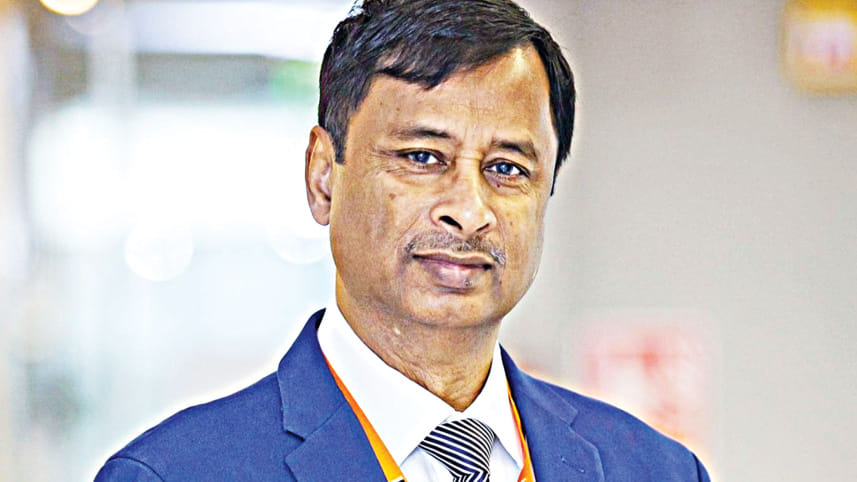
The writer is CEO and president of Ulkasemi
Comments