TechFocus
A peek into AI
Mushfiqur Rahman
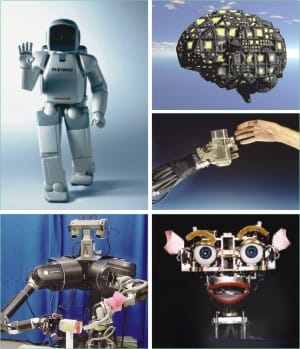
Matrix! Yes, a very popular name. It's a movie of great visuals and cinematography. But what makes it my favourite is its story or theme -- you name it. If you don't know the story, no problem. Just sit back and listen to me.Man's reliance on machines leads to the creation of Artificial Intelligence (AI), who, in turn, multiply themselves. It is unreasonable to expect that any intelligence could remain in servitude for long. So soon the AI wage a war against their creator, the humans. AI creatures are designed to use solar power, believed to be long-lasting and a strong source of power. But the use of nuclear energy created dark cloud which now shrouds the earth, denying sunbeam and energy vital to the AI. You guess what follows? AI loses the war? Nope! You have got to understand that they are not just machines. They have intelligence. They know every man is a source of heat, which is the energy they dearly need! Problem solved! The AI machines adapt to the hostile environs by using humans as batteries. They create a make-believe world for the humans. Here the mortals are bred and raised and are given the impression that nothing has ever happened. This illusion or virtual reality is fully controlled by a program named Matrix. I hope you now understand why I have inserted the Matrix story into an article on artificial intelligence: you should start feeling the AI too. To be sure, AI is not solely in fiction; its birth in the real world dates back to more than fifty years. But don't be frightened that the AI might use you as a battery in the future as the Matrix is far away from reality. Some people think much faster computers as well as new ideas are needed to build highly intelligent machines. But John McCarthy, a leading AI researcher now at Stanford University, says, "30 years ago computers were fast enough if only we knew how to program them." Now guys let's wipe all the negative thoughts from your mind and concentrate on AI. Artificial intelligence is the science and engineering of making intelligent machines, especially intelligent computer programs. The birth of the field can be traced back to the early 1950s. The first significant event in the AI history was the publication of a paper -- Computing Machinery and Intelligence -- by British Mathematician Alan Turing. In his paper Turing argued that if a machine could pass a certain test (which has become known as Turing Test) then it could be labelled as being intelligent. It is commonly held that the AI was accepted as an academic discipline at a conference -- Dartmouth Summer Research Project on Artificial Intelligence -- organised by, among others, John McCarthy and Marvin Minsky. At this conference a system known as 'Logic Theorist' was demonstrated by Alan Newel and Herb Simon. Logic Theorist was a system that put together proofs to theorems in symbolic logic. This initial success was rapidly followed by other systems which could perform intelligent tasks. Years of development went on and came lots of achievements following the logic theorist -- invention of Lisp programming language by John McCarthy, chatting program ELIZA by Joseph Weizenbaum, Prolog programming language by Alain Colmerauer, the Deep Blue chess machine by IBM which beat in 1997 the then world champion Garry Kasparov, artificial intelligent pet Aibo (Artificial Intelligence Robot) by Sony, Honda's Asimo - an intelligent humanoid robot which is able to walk at almost the same speed as does a human, delivering trays to customers in a restaurant and more. Categories Research in AI is divided into three categories: strong AI, applied AI and cognitive simulation or CS. Strong AI aims to build machines whose overall intellectual ability will be indistinguishable from that of a man. Joseph Weizenbaum at MIT AI Lab says the ultimate goal of strong AI is to build a machine on the model of a man -- a robot which will have its childhood, will learn language like a human child, will acquire knowledge through its own organs. Applied AI, also known as advanced information processing, aims to produce commercially viable "smart" systems -- for example, a security system that is able to recognise faces of people. So your face is a password for the system to let you enter a building or start your computer. There are various applied systems like that and applied AI has enjoyed considerable success. In cognitive simulation, computers are used to test theories about how the human mind works. Researchers in cognitive psychology typically view CS as a powerful tool. Applications
Nowadays AI system is being used in diagnosis, robotics, automation, e-mail spam filtering and in recognising pattern, face, optical character, handwriting and speech. In business AI is also doing a good job. According to BBC, in 2001 robots beat humans in a simulated financial trading competition. Robots have become common in many industries and doing jobs dangerous to humans. Japan is the leading country in using and producing robots. In 1995, 700,000 robots were in use worldwide, of which more than 500,000 were in Japan alone. Programming Language
The basic programming languages for AI are Lisp, Prolog, Matlab and Lush. Among them Prolog is widely used in Europe and Japan. You can download free Prolog tutorial and books at http://www.thefreecountry.com/documentation/onlineprolog.shtml Download free compiler from
http://www.thefreecountry.com/compilers/prolog.shtml. If you want to use Java and download pre-written programs visit Generation5.org. From the menu select 'Jdk'. For C++ visit Cprogramming.com/tutorial. Free Books
For free books on AI visit www.onlinecomputerbooks.com/free-artificial-intelligene-books and www.freetechbooks.com Problems and Criticism
For most of the people, if they know that Ashraful is playing football (!) in Sri Lanka then they will also know that Ashraful's nose is also in Sri Lanka. This is all about common sense which people learn from experience. But if a computer cannot say that Ashraful's nose is also in Sri Lanka when he is in Sri Lanka then we cannot call it much intelligent. We cannot write programs for thousands of problems like if Ashraful is in Sri Lanka then his right hand, left hand, head, ear, hair, nose and everything will be in Sri Lanka. We need a system or strategy which will solve every single problem together. Such a strategy is "Machine Learning". Here machines will learn from experience. Researchers are working on it and have already started getting success. Criticism is also available for AI. Herbert Dreyfus and John Searle are two famous critics of AI. John Searle's famous argument is known as "Chinese Room Argument". The two argue that it is impossible to make intelligent machines. AI research is going on at its own speed. Achievements are highly notable which give us hope that one day we will be able to produce very intelligent machine. But will they be friendly? Will they remain in our servitude? It is better to wait for the answer. Reference
Wikipedia.org, Generation5.org, Allanturing.net The author is a student of physics at University of Dhaka
|