Recurring floods in Bangladesh
Has there been a change in the lives of marooned people?
Mahbuba Nasreen
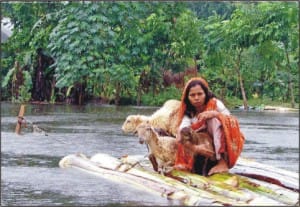
People have observed the sufferings of millions during the two consecutive floods of 1987 and 1988. The two floods made it really difficult for the poor to strive, survive and resume their livelihood after suffering the ravages. In 1992 there was no such severe flood in Bangladesh but the memories of the two severe floods were still alive in the minds of the people. The velnerable population, mainly women, asked the researchers what result they would expect against their information. No particular answer was possible to provide. However, it was hoped that their existing flood coping mechanisms would be strengthened if the policy makers pay attention to the people's own responses to floods. The research result shows that flooding was one of the main concerns of most rural households, life where was precarious even in non-flood conditions. It has also been observed that during flood people die from many causes: drowning, water borne disease, lack of medical facilities, snake bites, electrocution, starvation and flood-related accidents, for example, land slides, collapse of house or injury from floating debris. Most deaths occur due to sickness or lack of proper and timely treatment. Flood devastates all types of agricultural activities, crops, livestock, fisheries and forests in addition to houses and other infrustructures. The loss of livestock, upon which Bangladesh farming households depend for cultivation, meat, milk and income, is grave. The destruction of fodder cause severe animal malnutrition and many die. It has been explored that the problems of floods affect rural women more severely than men because of the wider range of responsibilities that they have for their households and those responsibilities keep them tied to their households more strictly than their male members. Those responsibilities, including food processing and cooking, cleaning, collecting water and fuel, bearing and rearing children, looking after livestock and household income generation, become much more difficult to perform under flood conditions. Despite this heavy burden, which women bear in extremely difficult circumstances, they demonstrate considerable fortitude and ingenuity in their attempts to maintain the life of their households. Most of the problems women faced, in the flood refuge or even at homes, were related to their gender identity, for example, insecurity, lack of toilet facilities and of being exposed in public. However, despite the severe problems the poorer women faced, for example, in obtaining fuel or procuring food, cooking and making platforms, they used their experience to good effect. It was also the poorer women who contributed more than men to solving the different problems consequent upon flood. These are only some of the research findings which have been shared by the young researchers with GO and NGOs. However, the researchers tend to become frustrated seeing that there has been little impact of the research findings on the lives of the poor people. People including women and children are still drowning, dying from snakebites or suffering from water borne diseases (The Daily Star, July 30, 2007). None of these are new phenomenon with the increase of flood water. Why then we are proud of managing disaster if we fail to support or aware people with proper guidance? Although there have been many discussions and criticisms levelled at government policy, they have dealt mainly with what should not be done rather than what should be done to control or mitigate flood. Discussions have focused on solutions to flood problems. Suggestions have included building and proper monitoring of embankments, roads and regulators, along with other efforts such as: dredging silt from the major distributeries of the Ganges, quick drainage by building adequate number of culverts, bridges along roads, improvement of flood forecasting and warning, regional co-operation to construct storage reservoirs along the major river basins, afforestation, barrage re-excavation of water bodies, river training and controlling the estuaries. People in Bangladesh have developed many strategies to cope with floods through their experience of living with it. Due to socio-economic differences, some people have the ability to cope better than others. Any steps in flood management should incorporate the indigenous methods used by the rural poor as a way of improving their chances of survival. Rather than trying to control or prevent flooding, measures should be taken to manage flooding. Unfortunately policy makers in Bangladesh have shown little or no interest in the socio-cultural conditions of the majority of the population. Instead they have given attention cordon approach which is not concerned with the problems of the majority of the people. The floods of 1987 and 1988 and cyclones of 1991 were the turning points in the GOB's approach to natural disaster response. The concept of 'disaster management' was introduced which included all aspects of planning and responding to disasters, prevention and preparedness measures, emergency response and post disaster rehabilitation. The government has also established an institutional framework that comprises both national and local level organizations. The government has prepared a guidebook, standing orders on disaster, with aim of maintaining proper coordination among the relevant ministries and government agencies and ensuring their proper functioning during emergencies. The roles of NGOs and donor community have also increased significantly. However, there are many more to do if we would like to support the people in their miseries. Coordinated initiatives from all segments of population are needed to support marooned people survive floods. Dr. Mahbuba Nasreen is a Professor in the Department of Sociology, Dhaka University
|
|

