An evening of classic film songs
Cultural Correspondent
Nibedan, a cultural organisation, held their 14th production -- a musical programme -- at the Sufia Kamal Auditorium, National Museum on June 1. Throughout the evening, artistes of Nibedan rendered songs from Bangladeshi films that have stood the test of time.The programme was dedicated to the memory of noted cultural personality and Tagore exponent Waheedul Haque, who according to members of the organisation inspired them to continue their efforts in promoting and upholding our music. Chief guest at the programme, veteran media personality, Ashrafuzzaman Khan unveiled a publication by Nibedan on Khondokar Nurul Alam. The man in his mid 90s, who introduced many established artistes to the radio audience recalled a time when "songs of Tagore and Nazrul were not yet known as 'Rabindra Sangeet' and 'Nazrul Sangeet."' Mohammad Rafiquzzaman, presenter and narrator, said, "In the '60s, around 20 movies would be released each year and virtually all songs from those films became popular. This trend continued throughout the '70s. However, our films and film-music took a nose-dive starting from '80s. Today around 80/90 films are released every year. Not even five songs from all these movies enjoy the popularity of cine-tunes from '60s or '70s." First song of the programme was "Ek nodi rokto periye" from the film "Abar Tora Manush Haw" (1973). Written and composed by Khan Atatur Rahman and originally recorded by Shahnaz Rahmatullah, the evergreen song is a moving homage to all the unsung Freedom Fighters. The choral rendition received a warm response from the audience. One after another, artistes of Nibedan -- Shukla Dey, Shaheed Kabir, Shutopa Roy, Mohua Rahman, Rajat Dutta, Partha Haldar and others -- rendered classics including "Ei prithibir porey" (from "Alor Michhil"; written by Mostafizur Rahman, composed by Satya Shaha and originally recorded by Sabina Yasmin), "Tumi arekbar ashiya" (from "Nagardola"; written by Gazi Mazharul Anwar, composed by Alauddin Ali and originally recorded by Rathindranath Roy), "Bimoorto ei ratri amar" (from "Shimana Periye"; written by Shivdas Bandyopadhyay, composed by Bhupen Hazarika and originally recorded by Abida Sultana) and more. The initiative was undoubtedly commendable. However, there were few discrepancies. Given, the artistes performing at the programme still have a long way to go, there was noticeable lack of coordination. Back up vocals at times seemed to override the main vocal. Certain singers seemed to be struggling with the tunes. Hopefully, the organisers would put more efforts in their arrangements in future.
|
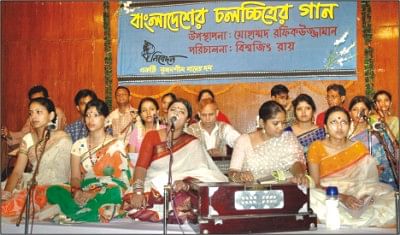
Artistes of Nibedan perform at the programme. PHOTO: STAR |

