Climate Change
Rising heat: Impact on human health
Md. Asadullah Khan
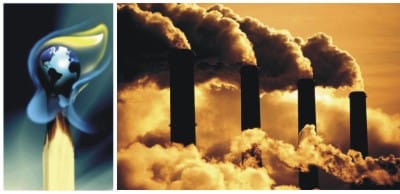
Perhaps the atmospheric scientists' prediction of the apocalypse due to global warming that means a gradual rise in worldwide temperatures caused by man-made gases trapping too much heat from the sun is coming true.Global warming is not science fiction any more but a looming reality. This otherwise means that the world could be in for dramatic changes in climate accompanied by major disruptions in modern society. Evidences have accumulated and experts have admitted that the earth is warmer than it was 100 years ago and experts now agree that it is no longer a natural phenomenon. A draft report currently circulated on the Internet asserts that the global temperature rise can now be blamed, at least in part, on human activity. And this report comes from the International Panel on Climate Change (IPCC), a respected UN sponsored body made up of more than 1,500 leading climate experts from 60 nations, together with representatives of the governments of 113 of the 192 member-nations. The final report has incontrovertible evidence that atmospheric concentration of greenhouse gases, like carbon dioxide, methane and nitrous oxide has far exceeded the usual range of the last six lakh years. These gases cause unusual greenhouse effect by forming a thin shield around the earth, trapping infra-red radiation from the sun. In just the right quantities they keep the earth warm enough for us to live in. But any thickening of the atmosphere, as has happened in the past 40 years, could send temperatures soaring to dangerously high levels and trigger catastrophic changes in the climate. Unless the world takes immediate and drastic steps to reduce the emissions of heat-trapping gases, says the panel, the so-called greenhouse effect could drive global temperatures up as much as 50C by the year 2100 -- an increase in heat comparable to the global warming that ended the last Ice Age and with perhaps equally profound effects on climate. Huge swaths of densely populated land could be inundated by rising seas. Entire ecosystems could vanish as rainfall and temperature patterns shift. Droughts, floods and storms could become more severe. Says Michael Oppenheimer, a senior scientist with the Environmental Defence Fund: "I think this is a watershed moment in the public debate on global warming." The recent scientific consensus is based profoundly on improvements in the complex computer models that climatologists use to test their theories. Climate experts simulate their data on super computers and look at what happens when human generated gases -- carbon dioxide from industry and auto exhaust, methane from agriculture, Chlorofluoro carbons from leaky refrigerators and spray cans -- are pumped into the models' virtual atmospheres. Impacts of climate change: Rising global temperatures are expected to raise sea level, and change precipitation and other local climate conditions. Changing regional climate could alter forests, crop yields and water supplies. It could also threaten human health and harm birds, fish and many types of ecosystems. Desert may extend into existing range lands. Impact on health: One of the effects of the unusual stretch of weather over the past 15 years has been to alert researchers to a new and even more immediate threat of the warming trend: the rapid spread of disease bearing bugs and pests. Climate change whether natural or man-made may already be spreading disease and pestilence according to a host of new studies, including a major report prepared by the World Health Organisation and other international institutions now being released. On the other hand, climate disruptions may be giving new life to such ancient scourges as yellow fever, meningitis and cholera. Experiences and observations suggest that extreme temperatures can directly cause loss of life. Moreover several serious diseases appear only in warm areas. Finally, warm temperatures can increase air and water pollution which in turn harm human health. The most direct impact of climate change would be the impacts of hotter temperature themselves. Extremely hot temperatures increase the number of people who die in a given day for many reasons. People with heart problem are vulnerable because one's cardiovascular system must work harder to keep the body cool during hot weather. Heat exhaustion and some respiratory problems increase in hotter temperatures. Higher temperatures also increase the concentration of ozone at ground level. The natural layer of ozone in the upper atmosphere blocks harmful ultraviolet radiation from reaching the earth's surface; but in the lower atmosphere, ozone is a harmful pollutant. Ozone damages lung, tissue and causes particular problems in people with asthma and other lung diseases. Even modest exposure to ozone can cause healthy individuals to experience chest pains, nausea and pulmonary congestion. Statistics on mortality and hospital admission show that death rates increase during extremely hot days, particularly among very old and very young people in cities. Reports have it that in July 1995, a heat wave killed more than 700 people in Chicago alone. The incidence of cholera epidemic that broke out in Bangladesh in 1993 following heavy monsoons is still fresh in public mind. Some scientists believe that algal blooms could occur more frequently as temperatures warm -- particularly in areas with polluted waters -- in which case diseases such as cholera that tend to accompany algal blooms could become more frequent. Global warming may also increase the risk of some infectious diseases, particularly those that only appear in warm areas. Diseases that are spread by mosquitoes and other insects could become more prevalent. Unusual weather such as dry spells in wet areas or torrential rains in normally dry spots tends to favour so-called opportunistic pests -- rodents, insects, bacteria, protozoa, viruses -- which make life more difficult for the predators that usually control them. Episodes of extreme weather are routinely followed by outbreaks of plagues, both old and new. In 1994 a long monsoon in northern India followed by 90 consecutive days of 38C heat drove rats into the cities. In the Indian city Surat, they caused an outbreak of pneumonic plague. The plague took a heavy toll of lives and ultimately cost India $2 billion. Rising temperatures in recent times allowed "Aedes aegypti" mosquitoes to thrive faster than earlier times. And true, thousands across Southeast Asia have been laid low by this tiny insect -- the female (striped) of this species. This mosquito carries the virus that causes dengue fever -- an affliction accompanied by chilling bone pain often leading to comatose situation. While the disease thrived in the tropics for more than two centuries, East Asia's economic woes coupled with warming trends have helped fuel the worst outbreak in years. Undeniably infection rates have been rising for years. Even in Bangladesh we have got to be alarmed since the advent of air travel has scattered "Aedes aegypti" across the globe and at the same time increased urbanisation has helped the mosquito reproduce. Open sewers in the metropolises which crisscross residential areas including slums furnish a weather of potential breeding grounds. "The El Nino weather system that has disrupted the annual monsoon rains may have also altered the mosquitoes breeding patterns", say doctors. Of all the infectious diseases humans will have to contend with as the world gets warmer, malaria may be the worst. Malaria is already the world's most widespread mosquito-borne illness. Rising temperatures will not only expand the range of Anopheles mosquitoes, but make them more active biters as well. Paul Epstein, an epidemiologist with the Harvard School of Public Health, notes that a temperature rise of 2C would more than double mosquito metabolism. A 2C rise in global temperatures could also expand malaria's domain from 42 per cent to 60 per cent of the planet. When temperature rises above 40C mosquitoes begin to die off, but at those temperatures so do people and the crops on which they live. Humans also make matters worse for themselves by the changes they make in their local environments. Unusually warm waters along with sewage poured in the coasts of Asia and Latin America played an important role in the cholera epidemic that hit Latin America in 1991 and Bangladesh in 1993. No body can possibly deny that the problem was exacerbated by the destruction of pollution-filtering mangroves in the Bay of Bengal and overcrowding in the cities. The same environment that empower microbes also weaken our defences against them. Heat and increased ultra-violet radiation resulting from ozone depletion and pollutants like chlorinated hydrocarbons all suppress the disease-battling immune systems -- both for humans and other animals. One thing was noticeable worldwide: abnormal weather had caused malnutrition, weakened animal immune systems and spurred the reproduction of viruses. Epstein, also an author of WHO study, notes that once ordinarily benign microbes invade weakened animals, they can become sufficiently deadly to invade healthy populations. The real threat for people, Epstein says, may not be single disease but a host of emerging microbes raising havoc among a host of creatures. Epstein further asserts that diseases afflicting plants and animals can send ripples through economies and societies no less disastrous than those affecting humans. There are other schools of thought opposing Epstein's views. John Shales, executive director of the Global Climate Coalition, suggests that when the world is faced with the pressing health problems stemming from overcrowded cities and the collapse of sanitation system, the threat of disease caused by climate change may seem like a minor concern. Nobody disputes possibly the role of poverty and over population in spreading diseases, but since the time scientists first raised alarms about climate change and its impact in the late 1980s, the international community has taken few concrete steps to address the problem. The world is still gambling and in effect gambling too much that the problems in future would not be getting so worse. Let us hope that the bet does not get so bigger. Md Asadullah Khan is a former teacher of physics and Controller of Examinations, BUET.
|