Two Koreas raise aid, disarmament at talks
Afp, Seoul
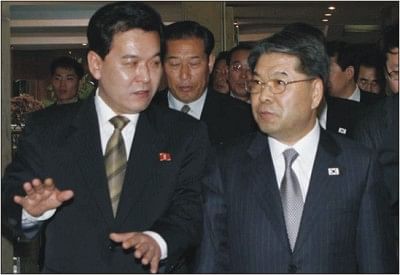
South Korea yesterday called for nuclear disarmament and North Korea stressed humanitarian projects as the two sides held their first high-level talks since the North tested an atomic weapon.At the meeting in Pyongyang, Seoul's Unification Minister Lee Jae-Joung expressed regret at the North's missile launches last July and nuclear test last October, according to the South's Yonhap news agency. He urged the communist country to fulfil in a "quick and smooth" manner a February 13 promise, made at multinational talks in Beijing, to disable its nuclear arms programme. North Korea's chief delegate in return called for the immediate resumption of suspended cross-border humanitarian projects, an apparent reference to crucial food shipments from Seoul and to family reunions. Seoul suspended the shipments seven months ago in protest at the North's weapons programmes. But a South Korean think-tank warned Wednesday that the impoverished state, which suffered a full-blown famine in the 1990s, could find itself short of almost a third of its food needs this year without international aid. The North's delegation chief Kwon Ho-Ung gave no details of the projects he has in mind, according to Yonhap. He also urged the early resumption of stalled economic talks. A spokesman for the South's delegation said food and fertiliser aid was not discussed during Wednesday's two-hour session. "We have yet to determine the scope of full-scale resumption of humanitarian projects. The details will emerge from working-level, high-level negotiations," said the spokesman, Lee Kwan-Se. The food aid and reunions for families separated for over half a century are likely to be a key focus of the talks ending Friday. The South has also been stressing the need for progress on the deal agreed at six-nation talks, under which the North agreed to disable its nuclear programme in return for economic aid and diplomatic benefits. The Seoul government is committed to engagement and reconcilation with its neighbour. But it is under domestic pressure not to give away too much without getting something in return, particularly since the weapons tests. A resumption of food aid "should depend on how the North will implement its part of the Beijing agreement," a Korea Herald editorial said. The South suspended its annual aid of 500,000 tons of rice and 350,000 tons of fertiliser after the missile tests. The North hit back by walking out of ministerial talks that month and halting family reunions. Seoul's state-run Korea Rural Economic Institute stressed the North's needs in a report, saying it may only be able to produce 4.3 million tons of food by itself this year. This compared to a requirement estimated at between 5.24 and 6.47 million tons. Minister Lee, in charge of Seoul's relations with Pyongyang, also called for work to resume immediately on a family reunion centre at the Mount Kumgang resort inside North Korea. He said reunions via video should be held no later than April. The reunions are a pressing issue, with families divided since the 1950-53 Korean War eager to see loved ones on either side of the heavily fortified border before they die. There are no mail or phone services across the frontier.
|