In Focus
Barisal Natok's commitment to theatre
Cultural Correspondent, Back from Barisal
"Marching towards progress with values of Liberation War" is the motto of Barisal Natok, founded in 1972 by a small group of enthusiastic youngsters wanting to make a difference in society. Beginning in a small classroom in BM School with a few members, today the strength of the group is over 300 with an office of their own in Kalibari, Barisal. It is also a member of the Bangladesh Group Theatre Federation. As one can deduce from the motto of the organisation, the group emphasises on plays based on the Liberation War. The group believes that theatre is an ideal way to educate the masses and youngsters on their heritage. They also focus on social issues and responsibilities. Some of their more prominent plays include Jamidar Darpan, Nurul Deen-er Shara Jibon, Juddho Ebong Juddho and Judhdho Swadhinota. Most of the people who work with Barisal Natok are volunteers. While they earn a living through other means, they come together in their passion for acting. Hence they can only practice after regular office hours. Barisal Natok stages free plays on momentous occasions such as February 21, December 16, March 26 and May 1. The group established the Barisal Natok Abritti Proshikkhon Kendra way back in 1983 to help children fine-tune their grooming and pronunciation. According to Palash Bala Manik, general secretary, Barisal Natok "Clear and pure pronunciation is a must for a good theatre artiste." While their work is mainly within Barisal, the Barisal Natok group has performed throughout Bangladesh. "In a year we have two or three shows and over 30 short plays. We have had over 42 original productions since the group's inception," asserts Manik. Even though there's a funds crunch and the government is lackadaisical about extending support to such groups, Barisal Natok is going from strength to strength with its team of dedicated members.
|
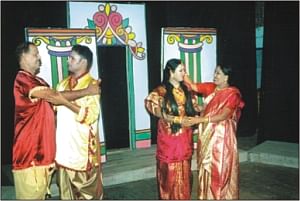
A scene from Padmabotir Panchali, inspired from Monosha Mangol |

