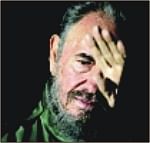
Surgery forces Castro to cede power
Ap, Havana
An operation forced Fidel Castro to temporarily cede power to his brother for the first time in 47 years, abruptly ushering in a period of uncertainty in the communist island as the severity of his illness remained unknown. Castro, less than two weeks away from his 80th birthday, did not appear on the live television broadcast Monday night in which his secretary read a letter from the Cuban leader. Castro's message said he underwent surgery for gastrointestinal bleeding, apparently due to stress from a heavy travel and work schedule related to recent trips to Argentina and eastern Cuba. Castro, who took control of Cuba in 1959, resisted repeated US attempts to oust him and survived communism's demise elsewhere, said he was temporarily handing over the presidency and the leadership of Cuba's Communist Party to his brother, Raul. Raul Castro, Cuba's defence minister who turned 75 in June, also did not appear on television and made no statement on his own. For decades the constitutional successor to his brother, Raul Castro has assumed a more public profile in recent weeks. Fidel Castro last appeared in public Wednesday as he marked the 53rd anniversary of his July 26 barracks assault that launched the revolution. The Cuban leader seemed thinner than usual and somewhat weary during a pair of long speeches in eastern Cuba. "The operation obligates me to undertake several weeks of rest," Castro's letter read. Extreme stress "had provoked in me a sharp intestinal crisis with sustained bleeding that obligated me to undergo a complicated surgical procedure." The calm delivery of the announcement appeared to signal that there would be an orderly succession should Fidel become permanently incapacitated. Cuban exiles celebrated in the streets of Miami, but Havana's streets were quiet overnight as Cubans awaited further word on Castro's condition. It was unknown when or where the surgery took place, or where Castro was recovering. Ongoing intestinal bleeding can be serious and potentially life-threatening, said Dr. Stephen Hanauer, gastroenerology chief at the University of Chicago hospitals. He said it was difficult to deduce the cause of Castro's bleeding without knowing what part of the digestive tract was affected.
|