Juanes
Conjuring up Latin magic
Drinking the tempting poison of your love
I remain near death and full of sorrow,
Still breathing the bitter smoke of your goodbye,
And since you left, all I have is...
I have a black shirt
Disguising my corpse underneath.
The Spanish song La Camisa Negra (Black Shirt, excerpt translated above) has created a buzz among the music lovers around the globe. The singer/song writer/composer whose intoxicating tune is taking over the air waves in Juanes.According to music critics, Juanes is so talented that he didn't need to calculate crossover approaches to attain international recognition; he simply needed to write, sing, and play his own songs in his own language, which was enough to make him the biggest and most important Latin artiste throughout the world. Born Juan Esteban Aristizabal in Medellin, Colombia, Juanes began at age seven to learn how to play guitar from his father and older brothers. His passion for the instrument led him to learn traditional Latin sounds such as boleros, tangos, and cumbias as well as Colombian folk music styles such as vallenatto and guasca. During his upbringing in Colombia he also became steadily acquainted with the grief endured by his fellow countrymen -- his close friend was killed by gunmen. He also lost his father to cancer, which only furthered his sense of grief. When Juanes moved to Los Angeles, he brought along a demo that got passed along to producer Gustavo Santaolalla, an Argentine transplant. Santaolalla heard promise in the demo, contacted Juanes, and ultimately signed him to his record label, Surco. In 2000 Juanes and Santaolalla began work on what would become Fijate Bien. Surco, in association with Universal Music Latino, released the album on October 17. Initially, the album did very well in Colombia, where it spent ten weeks at number one, but it was slow to catch on elsewhere, spinning off a few modest hits: the title track, Nada, and Podemos Hacernos Dano. It was a surprise, then, when it was announced in July 2001 that Juanes had received a whopping seven Latin Grammy nominations. Juanes cleaned up at the Grammy ceremony, winning three, including Best New Artiste. He completed work on his second album, Un Día Normal, in February 2002 and the lead single, A Dios le Pido, was sent to radio stations throughout the US and Latin America in April. The song, which translates to I Ask God in English, became an anthem in much of Latin America, a sort of prayer for peace throughout that often troubled part of the world (The New York Times called it "a prayer for peace with a somber intensity"). It went on to top the charts in 12 countries on three continents. It also spent more than four straight months atop the Colombian chart, breaking a record formerly held by countrymate Shakira. Following the whirlwind that followed Un Día Normal, Juanes once again headed straight to the studio, in May 2004, to begin work on what would become Mi Sangre, his third album. Mi Sangre hit the airwaves on September 28. Critics loved it and fans bought it. The album tallied up yet more chart-topping hits, not only re-establishing his place atop the Latin market but also his steady reach into the greater international pop market, especially in the US, where the mainstream media commonly upheld him in particular as a figurehead for the ever growing influx of Latino culture. Time magazine counted Juanes among its list of "the 100 most influential people in the world today." Compiled by Cultural Correspondent
|
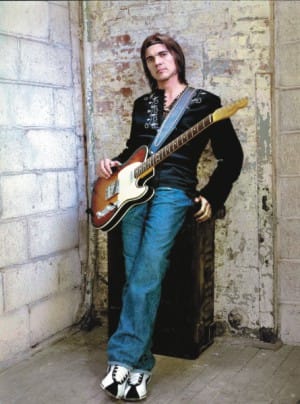
Juanes |

