Dipawali -- the festival of lights
Prem Ranjan Dev
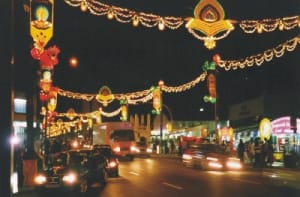
The Indian civilisation is an unending procession of festivals. Dipawali or Diwali, one of the biggest and grandest festival of Hindus, is celebrated in the month of Kartika (October-November). Dipawali literally means row of lamps and Diwali, as it is popularly known, means the 'festival of lights'. It is an important and popular festival in India in one from or the other. As a matter of fact it is a five-day long festival, but the main celebration takes place on the day of Dipawali (the dark night before new moon). One myth says that on this auspicious day 'Laksmi', the goddess of wealth and good fortune, roams about the visits the houses of people. So, people tidy up their houses, establishments and shops and decorate them with lamps to welcome the fortune goddess. On the night she is worshipped with great devotion. The occasion also commemorates the triumph of Lord Rama over Ravana, and Rama's return to Ayodhya. It is also on this day that Lord Krishna killed the demon Norkasura.The 'Skanda Purana' refers that people worshipped Bali on the night. They were to draw his image on the ground with different colours and worship it with fruits and flowers. They were also to give presents in his honour and light lamps. King Harsha has described it as 'Dipapratipadotsava' in his 'Nagananda'. According to him, brides and bridegrooms were presented gift on this occasion. Rajasekhara in his 'Kavya-mimamsa' has mentioned it as Dipamalika. The houses were white washed and rows of oil lamps were lighted in every house, streets and the market places. It was a gay occasion for all. Somadeva Suri in his 'Yasastilaka Champu' says that on Dipawali, the palaces and other buildings in the cities were decorated with white flags and rows of lights on terraces. In the evening temples, buildings, river banks, gardens and gateway were decorated with immumerable lamps. Entertainment like bull fights, dances and musical concerts were arranged. Similar interesting details have also been provided by Merutunga in his 'Prabandha Chintamani' and Hemachandra in his 'Desinamamala' and 'Dvyasrayakavya'. King Bhoja of Malwa in his 'Rajamartonda' describes this festival as Sukhratri. According to him on this occasion, Lakshmi, the oddess of plenty and prosperity, was worshiped at dusk and lamps were lit up on the trees, temples, roads, cremation grounds, river banks, hill tops and of course in the houses of both the rich and the poor. Jimutavahana in his 'Kavyaviveka' also refers to the Sukharatri-virata (the vow for a happy night) performed in the month of Kartika. Alberuni puts the celebration of the festival on the first of the new moon day of Kartika, when the sun reached the zodiacal sign Libra. People bathed, dressed festively, made presents to one another, came to temples to give alms and play merrily with one another till noon. At night they lighted a great number of lamps. He also states that the cause of this festival was that Lakshmi, once a year, on this day, liberated Bali, the son of Vairochana, who was also a prisoner in the 'seventh world' and allowed him to go out in the common world. It is not possible to describe at length about the many ancient, mediaeval and modern books on the Dipawali or Diwali festival, Dipawali was celebrated with equal zest by the Jainas also. According to the Jaina Harivamsa Purana, the members of the community joined the celebrations because it was the Nirvana day of Lord Mahavira, the twenty-fourth Tirthankara. The festival of Diwali is even now celebrated every year also in other continents and many countries in Asia. Dipawali is no mere occasion of congregation of men, women and children, in fact that reflects the inherent feelings of the people having a long cherished historical and rich cultural background. Dipawali also marks the advent of new season and sowing of new crops. The new Vikrama era begins on this day and account books are opened. The famous king Vikramaditya, after whom the era is named, was crowned on this day. People greet each other and distribute sweets. In Bengal Goddess Kali is worshipped with great fervour and devotion on this day. Swami Dayanand Saraswati the founder of the Arya Samaj attained salvation on this day. The great Swami Rama Tirtha also entered his final Jal-Samadhi on this auspicious point of time. On this occasion people ask for each other's forgiveness for the wrongs done knowingly or unknowingly and mutual relations are reestablished and strengthened. Thus all enmity is forgiven and forgotten as people embrace one another. At night, Lakshmi along with Ganesha are worshipped, and old accounts are closed and new ones are opened. People throng the bazars and streets during the night in order to watch and appreciate the illumination and fire works. Special shops and bazars are also set up on this occasion, and there is brisk buying of sweets, cloths, jewelery, toys etc. The courtyards, the gates and the places of worship are decorated and illuminated and fireworks are displayed till late midnight. Thus, this great festival of lights symbolises man's urge to move towards light from darkness towards enlightenment from ignorance. We know that the Hindu festivals, fasts, rituals, holy baths and observance of sacred days are part and parcel of the great cultural heritage of Indian civilisation. They are religious and social and also great source of spiritual and moral enrichment. The Hindu festivals are in fact more than what they appear to be. They are essentially a way of living and thinking in the course of existence. A Hindu festival is, in fact, something more than a 'festival'. It is cathartic in nature, and a means of purification, strengthening and self-denial. It is more of an exploration of the colourful things of life, without being bound to or obsessed by them. The dynamic spirituality and beauty of Dipawali can contribute so much to life and its fulfilment not only for the Hindu community but also all others. Let the greetings of Dipawali or Diwali reach all. Prem Ranjan Dev is president, Bangladesh National Hindu Council.
|
|

