Book Review
New Translation of Ghare Baire
Farhad Ahmed
The Tagore translation industry shows no signs of slowing down--new translations of his works can be spotted in increasing numbers by the peripatetic book store browser. Not all of them can be said to be up to the mark, but this newest translation of his Ghare Baire (first published in book form in 1916) by Sreejata Guha, brought out by Penguin under the imprint of their Modern Classics series, is accomplished and tonal. Appropriately enough, the book cover, in the attractive Classics black-white-gray format, is a scene from Satyajit Ray's film Home and the World. Surendranath Tagore first translated the novel into English in 1919, but chose to leave out whole bits important to the understanding of the characters, as well as 'poetic prose' sections that was deemed untranslatable. In this Penguin India volume, we get the full text. As Swagato Ganguly points out in his well-rounded Introduction (which should go a long way, as should the brief Notes at the end, in familiarizing non-Bengali readers with both the context of the novel as well as its Hindu mythological and societal allusions) Ghare Baire is notable for having been Tagore's first novel where he parted company with the formal, Sanskritized diction of sadhubhasa and utilized the colloquial prose of chalitbhasa. It meant that he had felt free to explore inner subjectivities of his characters in a manner which had not been seen in Bengali narratives till then. It also led him to do away with the convention of an omniscient narrator, and substitute in its stead first-person monologues and reported dialogues, where the same events could be reported by different characters in different registers, making for narrative sparks and sparkle Not for nothing was Ghare Baire first serialized in the pages of the literary magazine Sabuj Patra, which was then brought out to responsive to what had been described as a 'tempestuous new age' by Tagore. It were these 'innovative aesthetic experiments' that brought Bimala, the wife of the liberal zamindar Nikhilesh and main character in the novel who starts falling for the charismatic nationalist leader Sandip, irrepressibly to life. The novel has long been recognized as a sensitive exposition of the difficulties surrounding women's emancipation in pre-modern India, and a revealing mirror of the various divisions within the independence movement. Though today readers may become impatient with all those over-familiar Tagorean metaphors of widowhood and Nature (used to represent 'complicated metaphysical formulae'), or gape openly at wifely duties of touching the husband's feet with her sindoor, the life of the novel can be said to still broadly correspond with Bengali lives currently. Certain moods portrayed seem eternal to Bengal--or perhaps to a literate, literary Bengal, a world that is fast disappearing, especially in present-day Bangladesh. Below is Nikhilesh in a self-reflective mood, the unmistakable voice of the refined zamindar babu of a bygone era:
Every corner is flooded by the monsoon torrents; the glow off the young rice stalks is like that from the body of a child. there was water all the way up till the gardens in our house. The morning sun poured down on this earth unimpeded, matching the passion of the blue sky. If only I had music in my voice! The water in the streams shimmered, the leaves on the trees glistened and ever so often, the paddy fields trembled and sparkled--in the morning music struck up on this July day, I alone was dumb! The tunes are locked within me; all the brightness of this world coming at me gets imprisoned within and cannot go back. When I look at this lackluster, gloomy self I can understand why I am deprirved. No one can endure my company day and night. Bimal is so full of life. That's why, in all of these years, she has never ever seemed boring to me. But if there's anything in me, it is just mute profundity and rippling surges. I am only capable of receiving but I cannot stir. My company is like starvation; when I see Bimal today I can understand what a famine she has survived all these years. Who is to blame?
Alas-- Farhad Ahmed is a free-lance writer/editor.
|
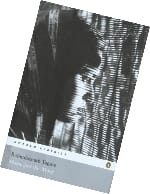
Home and the World by Rabindranath Tagore, translated by Sreejata Guha with Introduction and Notes by Swagato Ganguly; New Delhi: Penguin India; 2005; pp. 216; Rs. 200 |

