Theatre
The Broken Dreams: Zeroing on child trafficking
Kavita Charanji
Zorina was trafficked at the age of seven from a village fair. She is now in Karachi in unfamiliar surroundings. She turns her eyes to the birds in the sky and dreams of winging her way back to her motherland Bangladesh.Moina, a motherless girl trafficked by her stepmother, finds herself in a Mumbai brothel. However try as she might, she is unable to return to her family. These shocking real life stories on child trafficking were depicted in the theatre performance, The Broken Dreams, which was staged at the auditorium of the Bangladesh National Museum recently. The organiser was the Centre for Ethnic Children (CEC), an NGO and non-profit institution which strives to uphold the right of children and women, with a special focus on indigenous children. The 600-strong audience comprised of intellectuals, illiterate people, theatre personalities, urbanites, members of the donor agencies, NGOs, journalists, students and officials of international organisations. "The response from the audience was overwhelming," says Zillur Rahman John, director of CEC, pantomime artiste, teacher, author and founder director of Dhaka Pantomime. Adds John, who has directed the play, "Child trafficking is a very critical issue. We have chosen this as a subject because, particularly in the rural areas, many incidents such as trafficking occur widely. They are rooted in the lack of education and employment, among other factors. Theatre has the might to depict such issues." The Broken Dreams fuses mime, pantomime and silent acting techniques. Mime is a performance based on gestures, pantomime (story related) and silent acting. In silent acting sets can be used along with props such as sticks, cloth and spectacles. Dhaka is not the only locale for The Broken Dreams. The play, under the name of Shishu Pacharer Itikatha, is to go out into the rural areas, especially the Indian border belt areas. The programme begins on August 2 from the district Panchagarh. Then it will go to Dinajpur, Thakurgaon, Chittagong and Cox's Bazar. Finally the curtains will come down by January 2006. John expects a highly favourable response to Shishu Pacharer Itikatha in the rural areas. For the last two or three years, the organisers have staged similar performances to a 2,500-strong rural audience in each show at the minimum, going up to a maximum of 7,000. The programme does not end with a curtain call. Just after the performance, the actors share notes with the audience about the latter's reaction and the message of the production. This information is documented in questionnaires (with 35 questions) and covers the issue of child trafficking, cases and the villager's awareness level before and after the theatre production, among others. John firmly believes that theatre is an important catalyst in bringing about the transformation of the rural pockets. According to him there have been slow but sure changes in tackling the child trafficking issue. "Though the rural denizens are illiterate, they have feelings and the capability to comprehend serious issues if we can give them explanations in a simple, artistic and emotional manner," concludes John, who believes that theatre can help society as a major tool to reduce child trafficking, child labour and HIV/AIDS, among other burning issues of the day.
|
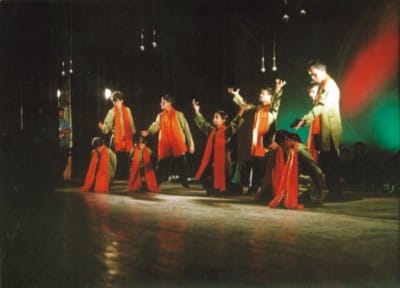
A captivating scene from the play |

