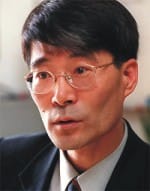
Concerted efforts key to fighting corruption
Korean leader of minority shareholders talks to The Daily Star
Monjur Mahmud
The root cause of poverty is corruption, he believed and decided to fight against it where it is deep-rooted. Initially, people thought it was an uphill task to fight against corporate giants like Korea First Bank and Samsung Electronics. But Professor Hasung Jang, a director of the Asian Institute of Corporate Governance at Korea University, created an example for others especially Asian states fighting corruption. "Corruption is everywhere and it is a national agenda around the world. Situation is same everywhere because human nature is the same. But there must be some people who are committed to bringing about a change," he told The Daily Star in an exclusive interview. Dr Jang, whom Financial Times selected as one of five "prominent figures in the world of corporate governance" in December, 2004, was in Dhaka to attend a two-day international conference on corporate governance that ended on Sunday. "There is no magic to change the situation overnight. Concerted effort is needed. It is extremely important for political leadership to understand why right policies are needed." Corporate governance is not an issue of the corporate sector -- it is a national issue, observed Jang. "Capital market will never develop if the interest of small shareholders is not protected." Referring to poor governance in Korean banks in mid 1990s, he said people learnt during the crisis. "Since there was no governance in banks, there was no safe place and people lost their money. Rather than talking only, we decided to do something effective. We behaved in a very professional manner." Jang became famous globally due to his role in establishing rights of minority shareholders of some big companies in South Korea. Since 1996, Jang has been the leader of minority shareholder activists' civil group (PSPD) in Korea. BusinessWeek recognised him by placing him among the Asian Star 50 in 1998 and 1999. Jang wrote endless papers in Korea arguing for market efficiency, which had exactly zero influence. "The market was not really working in Korea. So, no matter what I wrote, they didn't care." "And I became very frustrated and decided to jump into the market. Since I didn't have money I should carry some other weapons. I thought: how can I confront the guy who needs to be changed? And the natural answer was: become a shareholder." In 1996, well before the financial crisis, Jang formed his shareholder rights' committee. The thing muddled along for a bit until Jang seized on the idea of bringing lawsuits against companies on behalf of shareholders. He sued Korea First Bank, the largest bank in Korea run by a friend of his father. The bank failed due to poor governance. Jang later sued SK Telecom, a wing of the giant SK Group, and succeeded through a court order in getting three outside directors appointed to the board. The turning point for Jang came last fall, after the crash. In December 1998, he went after Samsung Electronics. He used the voting rights of shares owned by the American mutual fund Scudder, Stevens & Clark to force a meeting with Samsung's president. To prevent unwelcome questioning, the big Korean companies often marshal their employees to fill all seats. Outsiders can then be denied entry for lack of space. The president of Samsung Electronics had assured Jang this would not happen, but it did. On the day of the shareholders' meeting, which was scheduled to begin at 10:30 in the morning, Jang turned up four hours early and found the auditorium jammed with Samsung employees. The house remained full until 10:30 am and everyone in it was sleeping. When Jang finally elbowed his way into the meeting, he accused the Samsung chairman of cutting various sweet deals for himself and his family at shareholders' expense. The initial reaction of everyone in the room was shock. The meeting ran for 13 hours and 30 minutes, which, Jang has been told, is a world record for a corporate board meeting. By the end of it, Jang and his group of radicals were on their way to court, where they intended to prove, among other things, that the minutes of Samsung's corporate board meetings are forged. The point of all of this was to open the company's books, and to force it to run its business to maximize its profits rather than the power of its chairman. Jang got the verdict against the directors of the company and the directors were fined US$300,000. PSPD's achievements in enhancing corporate governance include winning a few number of landmark shareholder derivative suits against large corporations and banks in Korea. Jang was declared as Person of the Year by the Times.
|