Bombing spells more trouble for Afghans
Afp, Kabul
Three and a half years after the fall of the Taliban, a suicide bombing at the funeral of a top cleric who spoke out against the ousted regime has highlighted mounting insecurity in Afghanistan. The attack in the Taliban birthplace of of Kandahar apparently targeted the visiting police chief of the capital of Kabul, who died along with his bodyguards, and will raise fresh concerns that the Islamic hardliners are staging a comeback. Coupled with the recent kidnapping of an Italian aid worker plus huge anti-US protests that left 15 people dead, almost every day casts a new shadow over the success story being touted by the United States in contrast to Iraq. An optimistic mood settled on the country for a while after the election last October of President Hamid Karzai, who is backed by Washington. The United States leads an 18,000-strong international military coalition deployed in the country since late 2001. But after a quiet winter, unrest has returned with a vengeance on three fronts, although without yet taking the form of a coordinated offensive ahead of Afghanistan's first parliamentary elections due in September. The first front involves Taliban rebels, their Al-Qaeda allies and other Islamic militants concentrated mainly in the south, southeast and east of Afghanistan, near the Pakistani border. Their battles with Afghan and US forces have left more than 250 people dead, most of them militants themselves, according to figures given by Afghan and US authorities and impossible to confirm from other sources. At the end of the winter, one of Afghanistan's harshest for years, the US military claimed the rebels were on the verge of being knocked out, but they have since conceded they are still operational. Wednesday's attack, which killed at least 20 people, appeared to show the Taliban flexing its muscles against supporters of cleric and Karzai supporter Maulvi Abdullah Fayyaz. The militia said it gunned him down on Sunday after he led a council that stripped fugitive Taliban leader Mullah Omar of a key title. "I think the Taliban can launch big coordinated attacks in areas where they are strong. But so far there is no strategy by them as elections are still far off," a veteran analyst on Afghan affairs, Rahimullah Yusufzai, told AFP.
|
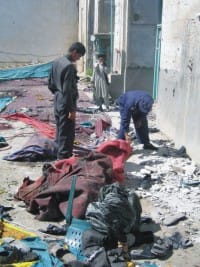
Afghan security personnel inspect the damage after a suicide bomb attack at a mosque in Kandahar yesterday. The suicide bomb attack at the mosque during the funeral of a leading cleric, killed by suspected Taliban militants, left at least 20 people dead in the southern Afghan city of Kandahar, including the police chief of the capital Kabul, witnesses and officials said. PHOTO: AFP |

