Pre-Budget Interview
Modern tax admin key to raising revenue
DCCI president talks to The Daily Star
Monjur Mahmud
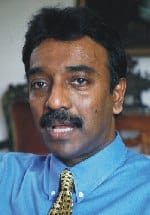
Accelerating the modernisation process of tax administration is vital for widening tax net and increasing revenue, felt Sayeeful Islam, president of Dhaka Chamber of Commerce and Industry. "Business people want to pay taxes but don't want to be harassed. Not that we only ask for duty cut, we also want increase in revenue by expanding tax net," he told The Daily Star in a pre-budget interview. Still a fear exists among general public about customs officials, the DCCI president said. "Modern administration and internet-based tax procedures can remove the fear." In order to lessen tax evasion, the National Board of Revenue can make it compulsory for firms to become members of the trade bodies, which will help trace tax dodgers, Islam observed. "If we really want to achieve export-led growth, we have to widen our basket," he said. Small and medium enterprises are the backbone of the economy, generating 80 percent of employment. SMEs can increase export and a consistent government policy is needed to do it, he said. "Export diversification programme has so far been a failure. There had been high hopes about information and communication technology and agro-processing industries but they failed to produce positive results." "If you look at our manufacturing base, there has been a lack of innovation in products development," the DCCI chief explained, adding there should have been some allocations in the budget for product development activities. Standardisation, packaging and obtaining ISO should be subsidised to address compliance issues so that these can help give positive impression about local products, he felt. "This is the only way we can reduce dependency on one product." "SME is the vehicle to achieve the economic prosperity. A specialised bank for the SME should be established, which will have special focus on providing loans ranging from one lakh to 10 lakh for the SMEs," the DCCI president noted. There are specialised institutions for micro credit but there is not such institution for SMEs, he went on suggesting the government to appoint a state minister for the SMEs under the Ministry of Industries. "Withdrawing tax holiday will be a bad signal for industries. Tax holiday must continue. We have to protect our local industries," he said. "Bangladesh garment sector developed because it got quotas -- not for the cheap labour cost." Raising the interest rates in line with the IMF's prescription is not desirable. Bangladesh is the victim for opening its door to others and now it needs market access, Islam said. Local assembling should be encouraged and the government should have a policy in this regard. There should have been at least 20 percent duty difference between completely knocked down (CKD) and completely built up (CBU) products to encourage assembling locally, he noted. It is very difficult for the business to grow without improving vocational and management skills, the DCCI chief said, adding it is very common that people are looking for jobs but there is a serious lack of trained and skilled employees. Bangladeshi workers are engaged in low-paid works mainly in the Middle Eastern countries, Islam said. "There is no alternative to vocation training. If we want to engage our manpower in upper segments we should provide workers with training." "The prime minister can meet business leaders once in every two months. This can help change the trade and investment environment as poor countries take time to implement different programmes," the DCCI president observed. Heads of the government in Thailand, Singapore, Malaysia have this type of programme, he added.
|