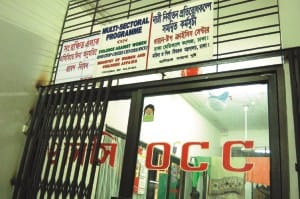
One Stop Crisis Centre at DMCH
Free services bring hope to victims
Sabrina Karim Murshed
Tania (not her real name), a 17-year-old garment worker, was devastated when she was raped and left to die on March 26 in Kalsi area of city's Mirpur. "I was severely injured and could survive only because I was brought here," said the fatherless girl, the breadwinner of her family. She said locals had brought her to the Dhaka Medical College Hospital's (DMCH) One Stop Crisis Centre (OCC). Like Tania, many other abused women and children are receiving help from this centre set up by the government in August 2001 with financial help from Danish International Development Agency (Danida). The centre has provided services like medical treatment, legal help and psychological assistance to at least 618 patients during the period August 19, 2001 to November 30, 2004, according to official records. "The centre does not only work to prevent violence against women and children but also tries to rehabilitate them," said Bipul Krishna Chand, coordinator, OCC. Run by two doctors and six nurses, the OCC offers free medical treatment along with security and counselling by OCC police desk for the victims of violence. Their medical examinations are done by forensic department of DMCH. "Those having critical injury are treated in respective departments and then sent to OCC if necessary while victims having minor injuries come directly to OCC," said Dr Bilkis Begum, consultant gynaecologist of OCC. She said sometimes patients come from emergency unit of DMCH while different organisations send patients sometimes. "Though we have only eight beds in the centre, number of patients never remains less than 15," Bilkis said. However, help seekers are never refused despite the paucity of space. "They share beds whenever necessary," she said. The victims are provided with free food along with necessary medicine from DMCH. "They are served with the same special diet supplied in the burn unit of the hospital, said Bilkis. However, department of social services office in DMCH provides with extra milk for the victims' nutrition and necessary commodities such as clothes, soap and oil. Legal counselling and support provided by Bangladesh National Women Lawyers Association (BNWLA) makes the centre different from other sections of the hospital. In most cases victims of domestic violence, rape and acid throwing end up in the centre where they are assisted with legal help. The OCC police desk having two officers and two constables help them if needed and a legal expert from BNWLA deals with the legal aspects such as filing cases and following them up. "Sometimes the victims come from other parts of the hospital learning about legal help being provided here," commented advocate Fahmida Akter of BNWLA designated to OCC. BNWLA also arranges temporary shelter for the victims and at least 63 victims were transferred to shelter home until November 30 last year. Psychological counselling by Naripakkho in the centre helps the victims come out of their trauma. To ease the help-seekers' access to the centre, the authorities have introduced its hotline service that is open on Sundays, Tuesdays and Thursdays when anyone can call at 9664699 and 011822782 from 11:00am to 1:00pm seeking help from the OCC.
|