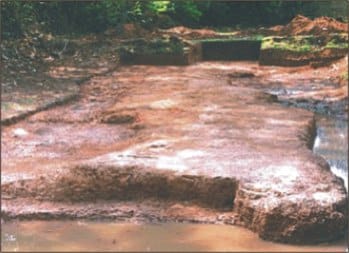
Narsingdi Heritage Site
Excavation suffers for lack of funds
JU Correspondent
Fund crisis and rules imposed by the archaeological department are hampering the third phase of excavation at Wari-Bateshwar in Narsingdi, the site of an ancient fort city dating back to 450 BC.An 18-member excavation team of Jahangirnagar University (JU) led by Shah Sufi Mustafizur Rahman, assistant professor of archaeology, on January 20 began the third-phase excavation of the fort city, considered one of the most ancient ones in the sub-continent. The team started work with funds allocated for fieldwork of students of JU archaeology department, and money given by the Asiatic Society and Prof Mustafizur. Sources in the excavation team said Minister for LGRD and Cooperarives Abdul Mannan Bhuiyan in May last year assured of special allocation of funds for the work but the money is yet to be available due to bureaucratic tangles. Against this backdrop, Mustafizur has urged the prime minister and minister for culture to ensure funds to continue excavation to unearth the ancient fort city, discovered last year. During the third-phase excavation, a furnace has been found in a room inside a trench. Experts believe it might have been used in domestic work or to melt iron. While excavating near a ditch at the site, Mustafizur claimed the road beside the ditch, discovered during the second phase of excavation last year, was the main road of the ancient city. He hopes to find a gateway somewhere around the ditch. The archaeological department's rules provide for such excavation under the supervision of a person employed by it, and it is hampering the work, the excavation team said. In the first phase of excavation in 2000, a team of JU students led by Mustafizur first traced some remains of the ancient city in Belabo thana of Narsingdi. During the second- phase excavation in March last year, the team discovered a mortar-made floor and a road in that area, and a Carbon-14 dating showed the two villages (Wari and Bateshwar) as the site of the ancient city, drawing attention of archaeologists from home and abroad. "We have excavated only one percent of the site while a huge excavation is needed to unearth the shape of the fort city which, I believe, is one of the most ancient ones in this sub-continent," said Mustafizur. " But fund crisis and rules of the archaeological department are forcing us to stop excavation."
|