Big rise in drug pushers prompts Aids fears
AFP, Dhaka
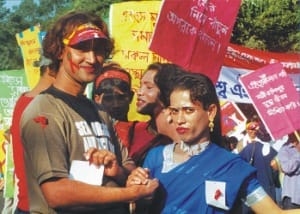
More than 5,000 people including sex workers rallied yesterday to mark World Aids Day in Bangladesh where figures showed the number of infected drug users had more than tripled in six years.The rally, organised by the National Aids/STD Programme, was followed by a seminar inaugurated by President Iajuddin Ahmed. Although Bangladesh has a relatively low number of known HIV/ Aids cases, the increase in infected drug users has prompted fears among campaigners about the spread of the disease. A 2004 countrywide study of needle-injecting drug users showed four percent tested positive for HIV/ Aids compared with 1.2 percent in 1998, Najmus Sahar Sadiq, assistant resident representative of the United Nations Development Programme, told the news agency yesterday. "Injecting drug users have become a major factor in the Aids /HIV situation in Bangladesh and what is worrying is that every time we test them the number of infected users doubles," she said. The study also found that in the capital Dhaka the percentage was 8.9 per cent. Government figures to be released soon put the number of HIV/ Aids infected people in the country at 465, said Sadiq. He added that the true figure was likely to be higher. A study released in January 2002 by the Joint United Nations Programme on HIV/ Aids found there were 13,000 people with the virus out of a population of 140 million. Bangladesh shares a long border with India, which has the world's second largest number of people with HIV after South Africa. Activists have warned that despite the relatively small number of people infected, Bangladesh remains vulnerable because of movement between the two countries and low awareness in the conservative Muslim country. A recent survey found that only 20 percent of married women and 33 percent of married men had heard of the condition. Authorities have in recent years begun allowing the broadcast of AIDS awareness advertisements but it is not enough, Sadiq said. "In terms of awareness Bangladesh still now is in a backward position. We need to adopt a risk-taking attitude to awareness now."
|