All time greats
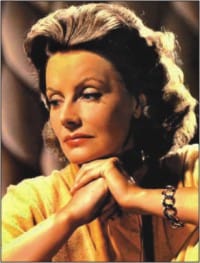
Greta Garbo: The reclusive legend
Fourteen years since she died, the mystery that surrounded actress Greta Garbo lives on. Famous for statements such as, 'I want to be left alone', and 'I don't want to be a silly temptress. I cannot see any sense in getting dressed and doing nothing but tempting men in pictures,' she had hits to her credit such as Anna Karenina, Susan Lenox: her rise and fall and the title role in Mata Hari.In 1954 she received a special Oscar (she had never won any during her career, though she had been nominated for Anna Christie, Romance, Camille and Ninotchka), for 'her unforgettable screen performances'. Characteristically, Garbo did not accept the statuette in person. Born in Stockholm, Sweden in 1905, she lost her father when she was 14. The family was destitute, compelling Garbo to leave school and go to work in a department store. She appeared in an advertising short at the same store while still a teenager. The film attracted the attention of comedy director Eric Petscher, who gave her a part in the film titled Peter the Tramp (1920). Encouraged by her own performance, Garbo applied for and won a scholarship in a Swedish drama school. She appeared in two Swedish films in 1921 and 1922 respectively. Though her parts were small, they were a launching board for her film career. Recognition came her way when she was offered a leading role by famous Swedish director Mauritz Stiller in The Atonement of Gosta Berling in 1923. At age 18, she was clearly destined for success. Both Garbo and Stiller were offered contracts with MGM. Her first US film was The Torrent (1925). It was a silent film where she didn't have any lines. After starring in films such as The Temptress (1926) and A Woman of Affairs (1928), Garbo played a role in the 1930s Anna Christie (her first talkie) which gave her a powerful screen presence as well as an Academy Award nomination as Best Actress--which she didn't win. Her most striking performance was in Anna Karenina where she played the title role of a woman torn between her husband and lover. Her last film was Two-faced Woman, a comedy which hit the silver screen in 1941. After World War II, Garbo, realising that the world had changed forever, decided to retire from films. In her last years, she spent her time socialising with some of the world's jet-setters such as Aristotle Onassis. She even penned her biography in 1990. When she died of natural causes in New York the same year, she left behind the mystique that went with her name. Compiled by Cultural Correspondent
|
|

