Leprosy elimination in sight
Commendable job by Danish-Bangladesh Leprosy Mission:Number of patients on decline, awareness created
EAM Asaduzzaman,Nilphamari
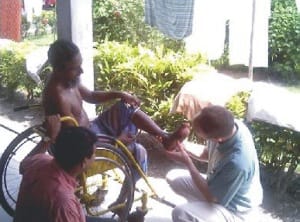
The man had started wailing when told that he had leprosy. This was the situation about a decade ago because of social stigma and superstition that leprosy is a curse and incurable. He cooled down when convinced that the disease could be cured. "People even committed suicide out of dejection but the situation has changed now. Dr Rezaul Alam was narrating his experience during his early days at the Nilphamari DanishBangladesh Leprosy Mission (DBLM). Patients are being treated well now and rehabilitated. Superstitions and misconceptions have largely been removed. Leprosy elimination is in sight now, Dr. Alam, Medical Director of DBLM said. In 1977, a Danish named Ivor Vip Trop leased 25 acres of land at Knot Khana from Bangladesh government. He set up a leprosy hospital named Danish Bangladesh Leprosy Mission (DBLM) to provide love, care and treatment to patients. Now this is a big and modern 100-bed leprosy hospital with sophisticated arrangement also for operation. There are seven doctors, four of them Bangladeshis and three foreigners-- from Britain, Switzerland and the United States. Its Project Director (PD) Prodip Bahar Promanik said, "Our activity is not confined to the hospital only. We work to eliminate the disease in four districts. "We have another 55 field clinics and 200 filed staff. Critical patients referred by hospitals, NGOs and doctors come here from all over the country for better treatment and operation." Dr Alam, who is also one of the reputed skin specialist in the country, said a kind of virus named Micro Bacterium Lapry is the causative agent of leprosy. Any fade spot of any shape with no sensation is leprosy. When the number of spots is more that five, it is in 'serious stage', he said. The most tragic thing is that any injury in the spot silently causes gangrene but the patient can not even know because of lack of sensation there. This gradually ruins or deforms the part of the body and may even lead to death. Leprosy can be completely cured if detected at the primary stage. But normally patients hide the disease at that stage. There are 10 wards at the hospital for patients of different stages. This correspondent visited the hospital on Tuesday. It was a terrifying scene at the dressing room. Some serious patients were groaning in pain. Fluids were coming out from their gangrene affected limbs, emitting bad smell. But doctors and their assistants were dressing those limbs with care after medication. Dr Rezaul Alam and surgical consultant from Switzerland Dr Jean Franois Negrini do operations. Dr Alam and Dr Nigrini were examining wounds of patients with hands. "Leprosy is the least infections disease", Dr Negrini told this correspondent. Sukur Ali was one of the critical patients in the post- operative. He said he was a chicken trader at Karwan Bazar in Dhaka. Mohakhali leprosy hospital in Dhaka referred him to the DBLM for operation. Shahidar Rahman of Lalmonirhat is here, referred by Rangpur Medical College Hospital. Dr Alam said they are treating leprosy patients with MDT (multi drug therapy). It involves use of three medicines-- Dapsone, Lemprene and Riffampicin. Patients at primary stage may be cured with MDT within six months. Critical patients take one year on more. Mortality rate in the hospital is very low. Last year only one four patients died. The Project Director said their well trained field staff organise 'skin camps' at different places, check school students to detect leprosy. They also provide home service to primary patients, arrange community meetings to create awareness and attend rural clinics on fixed dates. He said they have cured over 40,000 patients in the country. "It is a great achievement for us. Through our continuous efforts, leprosy is on the verge of elimination," he said. The number of detected leprosy cases came down to 1417 last year from 2471 in 2001, he said. Since 2001, the DBLM is working with the government under an Integrated National Leprosy Elimination Programme. "The government gives us MDT, which it receives from WHO (World Health Organisation). "With our co-ordinated efforts, leprosy has been controlled in Panchagarh and Thakurgaon. We are now fighting to eliminate it from Nilphamari and Rangpur", he said. The disease is said to be under control when the number in one or less per 10,000 people. But it is still 2.31 in every 10,000 in Nilphamari and Rangpur. The rate is declining Nilphamari Civil Surgeon Dr Md Abdur Rahim said DBLM is nicely collaborating with the government in eliminating leprosy. "Our health workers work with them (DBLM staff) in upazila health complexes and also organise 'skin camps'. The DBLM also produces artificial limbs for patients, runs a vocational training centre to train cured patients so that they can earn their livelihood and also gives them financial assistance for rehabilitation. In 1998 the Danish Bangladesh Leprosy Mission was handed over to the Leprosy Mission International, a UK- based organisation. The Denmark government will fund for it till next year.
|