Zinc helps children recover quicker from pneumonia
In addition to its effects in diarrhoea, zinc speeds up recovery from severe pneumonia in young children. A recent article by ICDDR,B scientist W. Abdullah Brooks and colleagues published in the Lancet shows that children taking elemental zinc (20 mg per day), plus the hospital's standard antimicrobial management, recovered a day earlier than children who were not taking zinc. The effect seems to "result from substantial reductions in the resolution times of each of the severe pneumonia indicators", including chest in-drawing, severely raised respiration rate, and hypoxia. This indicates a consistency between specific signs and the diagnosis of severe pneumonia. It is believed that the effect of zinc in the treatment of pneumonia is due to its role in the acute-phase response mediated by cytokines.The extent of inflammation and its resolution rate surrounding infection are also protected by zinc therapy. It might protect the lung from inflammatory states, and its deficiency might enhance airway inflammation and cellular damage. The effect is manifested by shorter duration of disease symptoms and quick recovery from severe pneumonia in young children. The study was conducted on children aged 2 to 23 months admitted in the Matlab Hospital of ICDDR,B. Children of this age-group were selected for the study because of their high pneumonia morbidity and restricted options to prevent community-acquired bacterial pneumonia due to the lack of vaccines to prevent such infections. The paper concludes that adjuvant treatment with 20 mg zinc per day accelerates recovery from severe pneumonia in children, and could help reduce antimicrobial resistance by decreasing multiple antibiotic exposures, and lessen complications and deaths where second line drugs are unavailable. Replication of the study in other populations, including those with and without a high prevalence of zinc deficiency, is necessary. Studies should also include a follow-up period to see the effects on subsequent illness. "Such studies would allow the global public-health significance of these findings to be assessed, and the results best applied to improve child health and survival." Dr Ishtiaque Zaman expressed that it should not be treated as a substitute of ORS, but it should be given in addition to ORS. As it is in tablet form, it has more compliance. Source: ICDDR,B
|
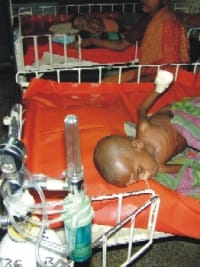
ICDDR,B photo |

